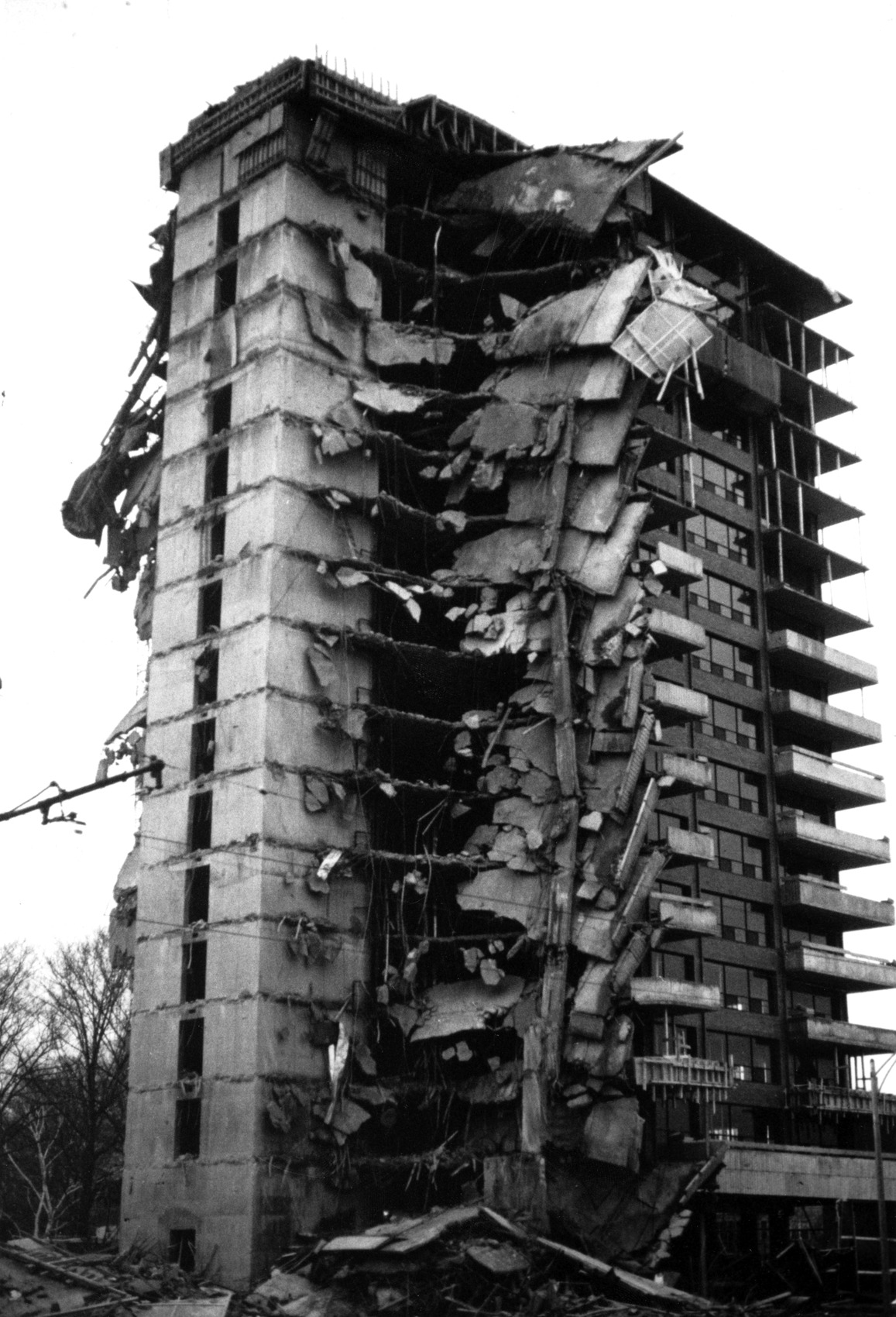
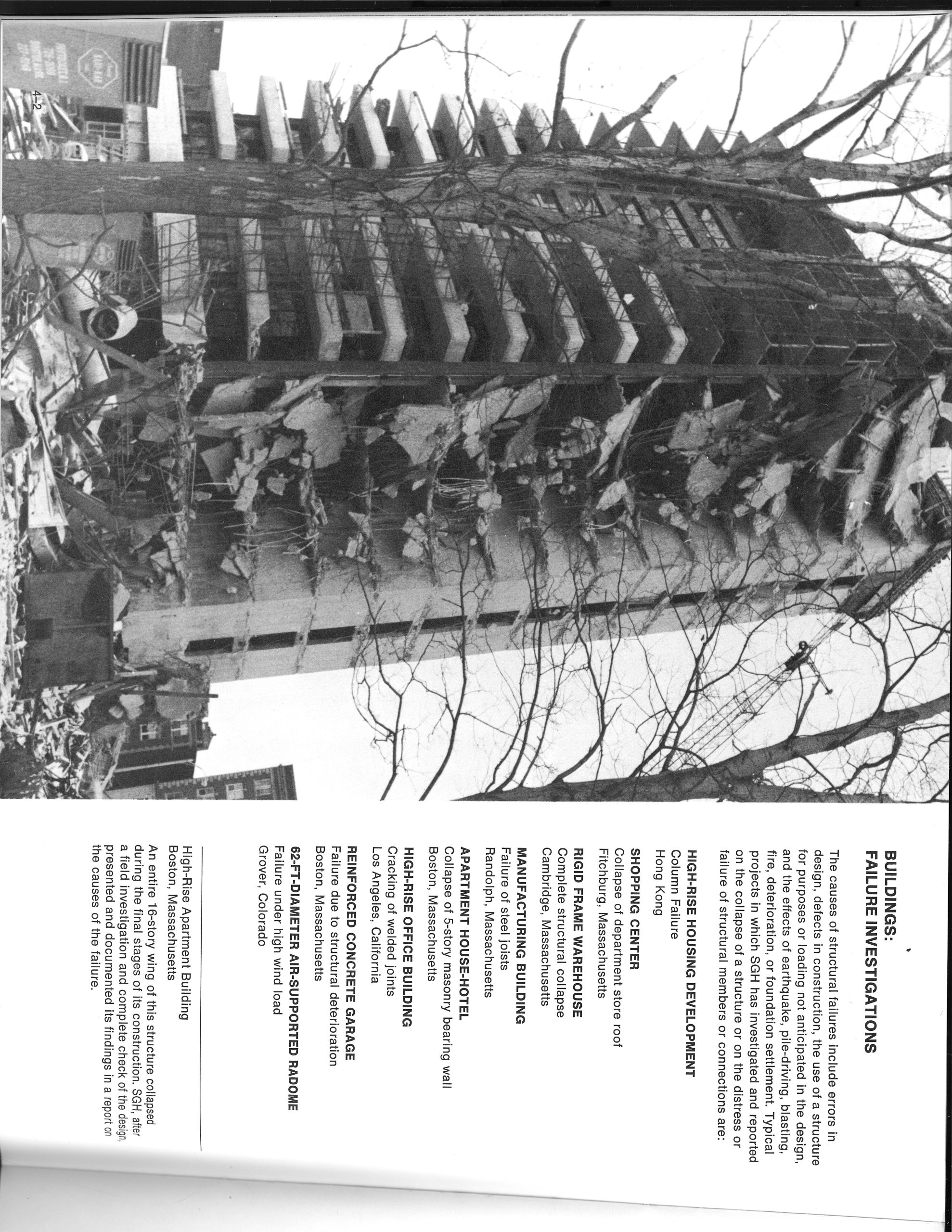
Highlights of our investigation include the following:
- Review of construction documents
- Interviews with eyewitnesses
- Evaluation of weather conditions prior to and during the time of collapse
- Documentation of the as-built construction, collapse configuration, and in situ shoring
- Estimation of loads on the structure at the time of collapse
- Finite element analysis with comparison of results from the Mayor’s Commission
Based on our investigation, SGH concluded that the progressive collapse was caused by the following construction deficiencies:
- Shoring, required by the contract documents to support the main roof slab during placement of the penthouse slab, was not provided
- The compressive strength of the roof slab was just over half of the design compressive strength at the time collapse due to a lack of coldweather protection and insufficient curing
- The unsupported, understrength roof slab was overloaded due to the weight of concrete formwork, fresh concrete and steel reinforcement for the penthouse slab, and miscellaneous construction materials and supplies stored on the roof slab
The procedural causes noted above resulted in the shear failure of a column supporting the roof slab. The accumulation of loads of the collapsed structure on the lower levels led to the progressive collapse of the subsequent levels.