Understanding Hail Damage Risks for Roofing and Wall Systems

Hail is one of the most destructive forms of severe weather affecting building roofs and exterior wall claddings. According to the Insurance Information Institute, the insurer State Farm alone paid out more than $3.5 billion in hail-related claims in 2022. Large hail falls from severe thunderstorms that frequently affect high-risk areas, including Texas, Oklahoma, Kansas, and Nebraska, though it can occur across most of the United States.
For building owners considering new or replacement roofs, it is important to be aware of location-specific hail risks, including hailstorm frequency and hailstone sizes, to make informed decisions in choosing hail-resistant products and systems. Project teams involved with properties that have experienced hail damage should understand the types of damage that hail may cause and the potential consequences of unaddressed hail damage.
Effects of Hail on Building Elements
A falling hailstone can have substantial kinetic energy. When it collides with a building material, the hailstone transfers a portion of that energy—its impact energy—to the struck surface. Impact energy is a function of the hailstone’s size, density, and impact velocity. Larger hailstones, which are more massive and fall at a faster speed than smaller hailstones, have a much greater impact energy than smaller hailstones. In fact, a 2 in. diameter hailstone can deliver more than twenty times the impact energy of a 1 in. hailstone. With sufficient impact energy, hailstones can crack, fracture, or puncture roofing and exterior wall materials, shortening the material’s lifespan or, in severe cases, causing holes that can allow water penetration.
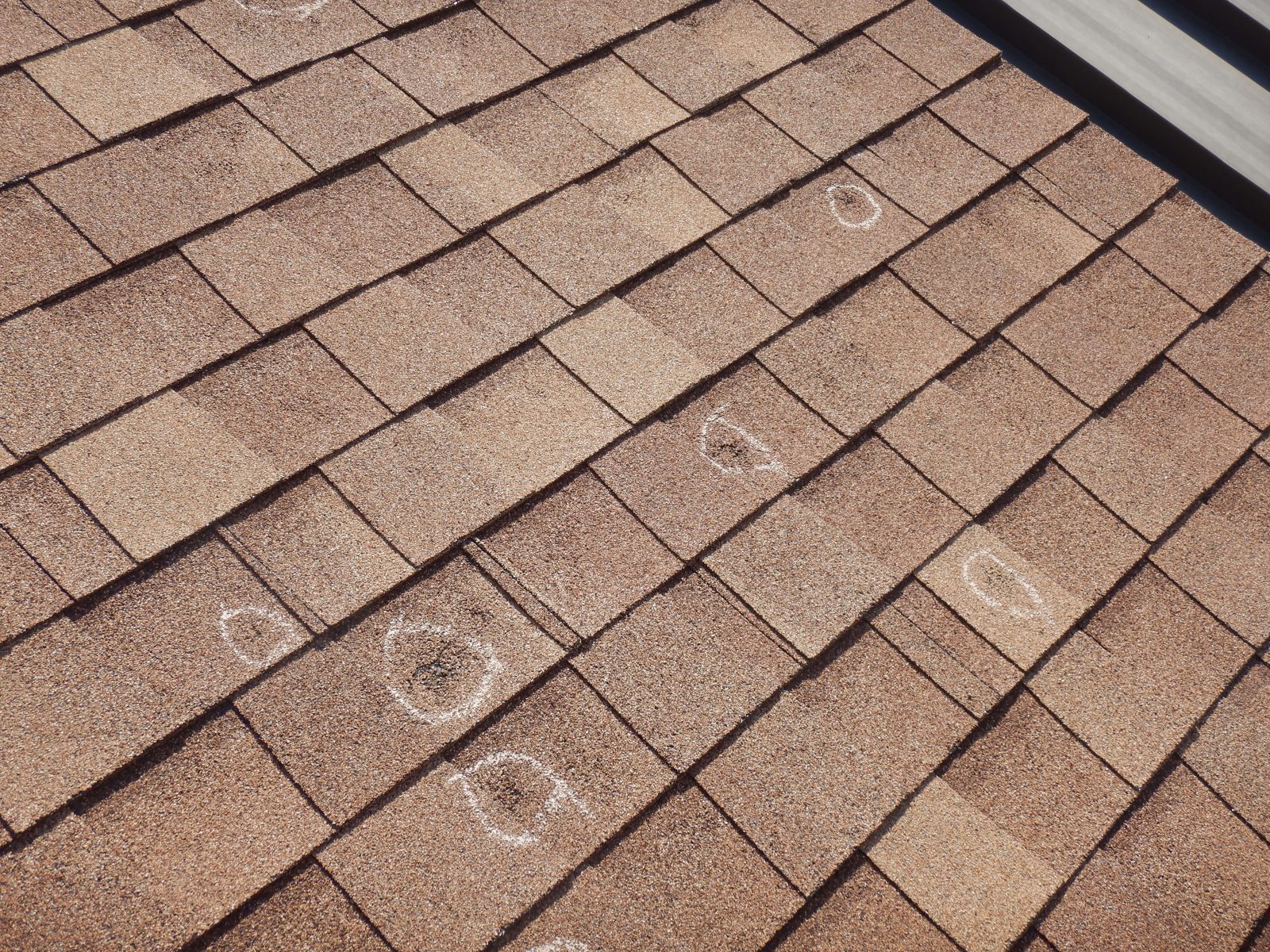
Roofs are the most frequently hail-affected component of a building, but the resistance of roofing materials and roofing systems to hail impact damage varies widely. The age of the roofing material also plays a role—older, weathered materials may become brittle and more susceptible to hail damage over time.
Roofing material selection also plays a critical role. Asphalt shingles not rated for hail tend to be on the lower end of the hail-damage resistance scale and may begin to experience granule loss with hail over about 1 in. Single-ply membrane damage and cosmetic damage to metal roofing can occur with hail 1.5 in. or larger, and 2 in. hail can begin to damage more robust roofing materials such as concrete tile and built-up roofing.
Designing for Hail Resistance
Roofing material and system resistance to hail damage varies, so it is important to understand hail risks to select a system with adequate hail resistance. Model codes such as the International Building Code (IBC) do not explicitly state hail resistance requirements, so it is typically up to the specifier to select an appropriate hail resistance unless the local jurisdiction or property insurance carrier specifies additional requirements.
Roofing systems are typically tested for hail resistance using one of two IBC-referenced standards:
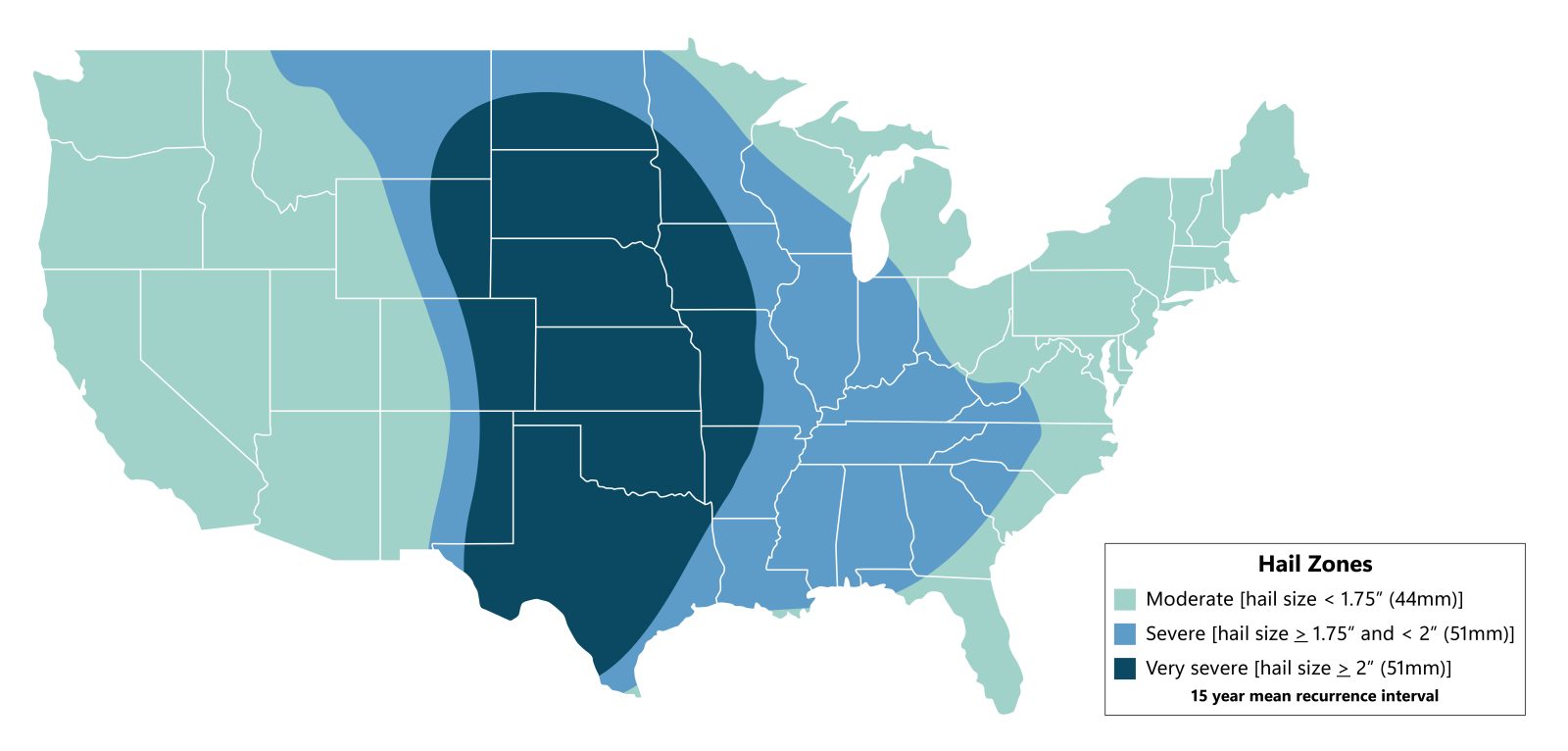
- FM Global test standard FM 4473. This test uses gun-propelled ice balls to simulate hail and its impact energy. Based on test results, FM Global rates roofing materials for exposure to “Moderate Hail” (hail less than 1.75 in. diameter), “Severe Hail” (hail between 1.75 and 2 in. diameter) or “Very Severe Hail” (hail greater than 2 in. diameter). Hail size and ratings correspond to FM Global’s hail risk map. FM Global’s Data Sheet 1-34, “Hail Damage,” provides additional guidance.
- UL Solutions test standard UL2218, “Impact Resistance of Prepared Roof Covering Materials.” This standard uses steel balls dropped from a specified height to simulate hail. Roofing is given a rating based on its resistance as Class 1, 2, 3, or 4, with Class 4 having the greatest hail resistance, equating to the impact energy of a 2 in. diameter hailstone.
Several resources are available to help determine the hail risk of a particular location. Hail risk data are viewable using the Federal Emergency Management Agency’s (FEMA) online Resilience Analysis and Planning Tool (RAPT). FM Global Loss Prevention Data Sheet 1-34, “Hail Damage,” includes a discussion of hail hazards, damage types, and impact energies. It also features a hail hazard risk map (pictured below), with regions denoted as “Moderate,” “Severe,” or “Very Severe” hail risk, used with test results documented in accordance with the FM 4473 standard.
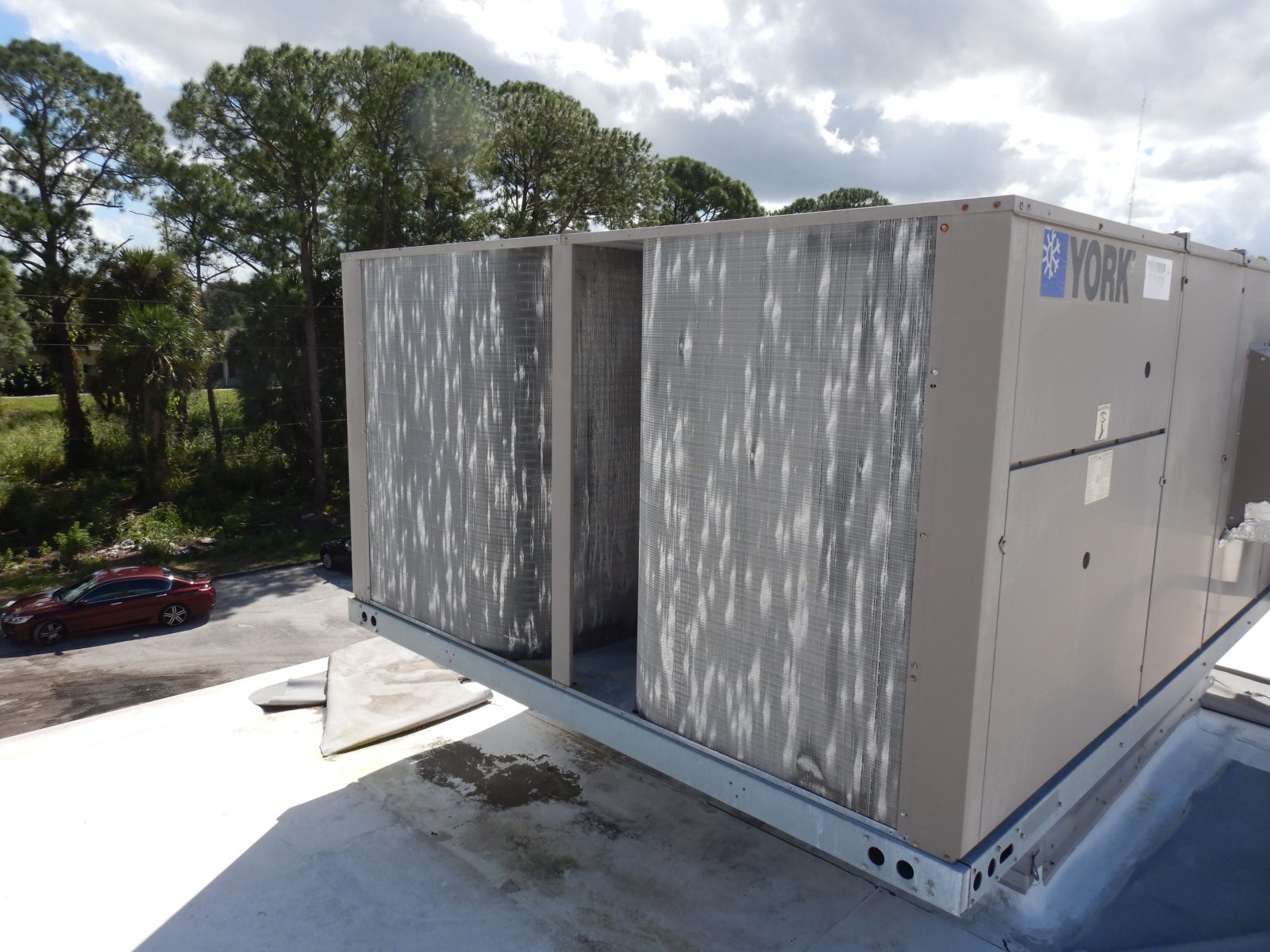
Strong winds in severe thunderstorms typically propel falling hail at an angle, where it can strike and damage vertical surfaces such as windows and wall coverings. There is currently no industry-accepted hail resistance rating system for wall coverings. However, it is generally understood that softer, more brittle materials such as vinyl siding and EIFS are less resistant to horizontally traveling hail than systems like stone, masonry, or stucco. Glazing can also be susceptible to hail damage.
Conclusion
Hail is a significant driver of insurance costs and storm-related economic loss. With continued growth and development in areas with high hail hazards, hail damage losses are likely to grow and accelerate even more. Understanding hail risks, hail resistance of roofing and exterior wall materials, and design features that improve resistance can help stakeholders make better-informed decisions to protect their buildings from hailstorms in the future.
About the Author
 Eric Olson specializes in designing, evaluating, and investigating building enclosures, including glazing, cladding and veneer systems, and roofing and waterproofing systems. His experience includes investigating wind, hail, and flood damage, and assessing design, construction, and performance issues related to building enclosure systems.