Video
March 17, 2021
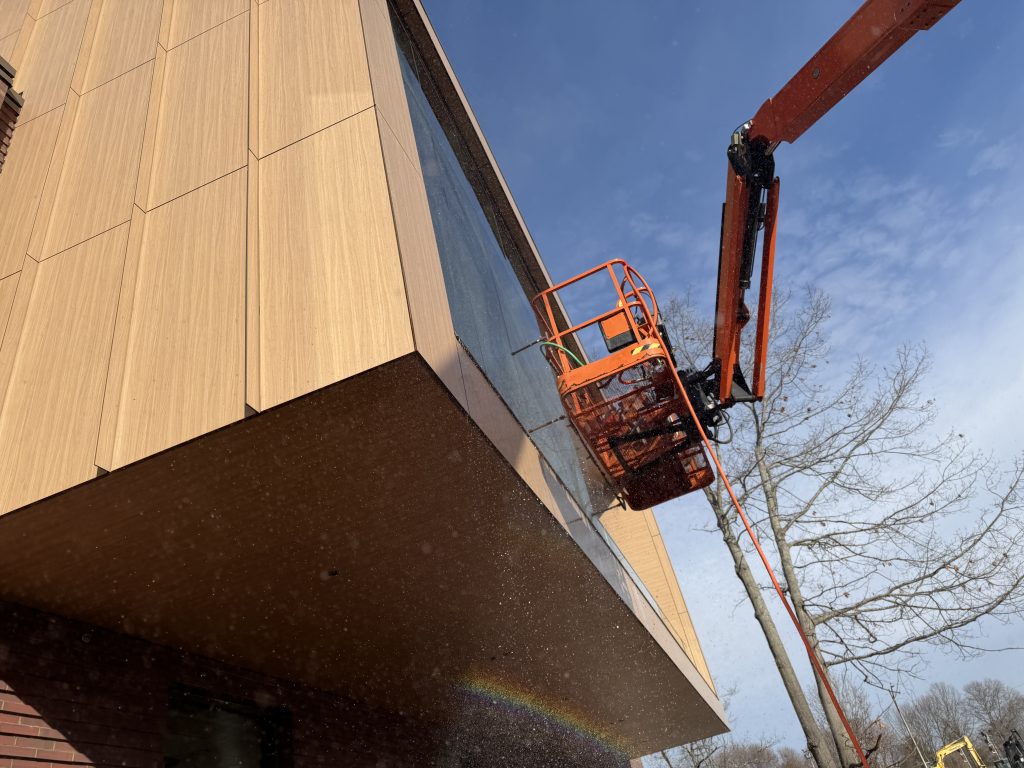
As performance demands on building enclosures must meet high standards for durability, weather, and energy performance, facade systems are becoming more complex. These systems remain vulnerable to water infiltration without proper detailing, fabrication, and installation. Poor water management can lead to significant issues, including material deterioration, corrosion, organic growth, and damage to interior finishes. These failures often result in costly repairs, construction delays, and potential litigation. Design alone does not guarantee reliable long-term performance in the field. Variability in design, fabrication, installation, cross-trade coordination, and site conditions can affect system performance. As a result, field testing is critical to verification, providing objective data to confirm assemblies meet performance expectations.
Dynamic fan testing is one of several methods used to evaluate water penetration resistance. The primary standard used for this testing is AAMA 501.1-17, Standard Test Method for Water Penetration of Windows, Curtain Walls, and Doors Using Dynamic Pressure. This standard establishes procedures for evaluating the water penetration resistance of exterior fenestration systems, including curtain walls, storefronts, windows, and doors. The test attempts to simulate wind-driven rain by directing airflow from a high-speed fan toward the facade while water is uniformly applied through a spray rack system. The combination of airflow and water application creates pressure conditions that more closely replicate actual weather exposure than static testing methods. This testing has traditionally been used primarily for large-scale performance mockups due to the size of the required equipment (e.g. large airplane engines). With the development of smaller fans, this testing is becoming increasingly common at construction sites (see Photo 1), though AAMA 501.1-17 is a laboratory-based standard. The Fenestration and Glazing Industry Alliance (FGIA) is developing a field-based standard that is likely to be published in late 2026. A few of the forthcoming updates are summarized at the end of this article.
Although AAMA 501.1 is commonly referred to as a “dynamic” pressure test, the test itself does not create fluctuating or cyclic pressure conditions. Instead, the fan produces a steady airflow toward the facade, resulting in relatively constant pressure across the test area. The term “dynamic pressure” refers to the pressure generated by moving air rather than the static air pressure differential created within a sealed chamber. When properly executed, dynamic fan testing serves as a valuable tool within broader enclosure testing, aiding other methods and confirming overall system performance. This article aims to provide a better understanding of the general testing procedure and its benefits.
Construction Specifier