Topic Brief
Publication
Understanding the limitations of OSB in roofing systems
July 27, 2026
1 Min Read
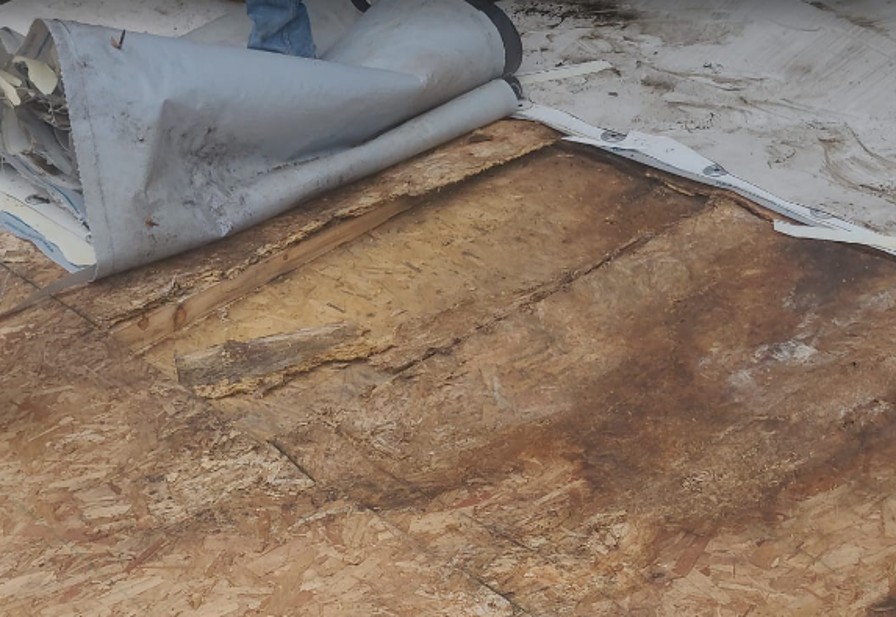
OSB used in roofing can both provide satisfactory performance and create additional risk when using used as compared to plywood.
Oriented Strand Board (OSB) is an engineered, structural wood panel formed from compressed wood rectangular wood strands bonded with adhesive resins under heat and pressure. It was developed to simulate plywood’s “directional strength” at a lower cost. By the early 2000s, OSB had become a dominant material, overtaking plywood in many applications, primarily due to lower cost and widespread availability. OSB is commonly used for roof decking and wall sheathing in building enclosures.
Despite widespread use of OSB panels, roofing contractors’ organizations (e.g., National Roofing Contractors Association [NRCA] and Western States Roofing Contractors Association [WSRCA]) have recently begun to caution and recommend against the use of OSB roof decking for most steep-slope and some low-slope applications. In our experience, OSB performs satisfactorily when kept dry. However, numerous conditions outside the control of the roofing contractor can introduce moisture that can adversely affect OSB sheathing, either during construction and prior to roof installation or in-service. Simply put, the use of OSB in roofing can increase the risk of performance problems.
Publisher
Roofers Coffee Shop