Non-Destructive Methods to Detect Hidden Damage in Stone Cladding
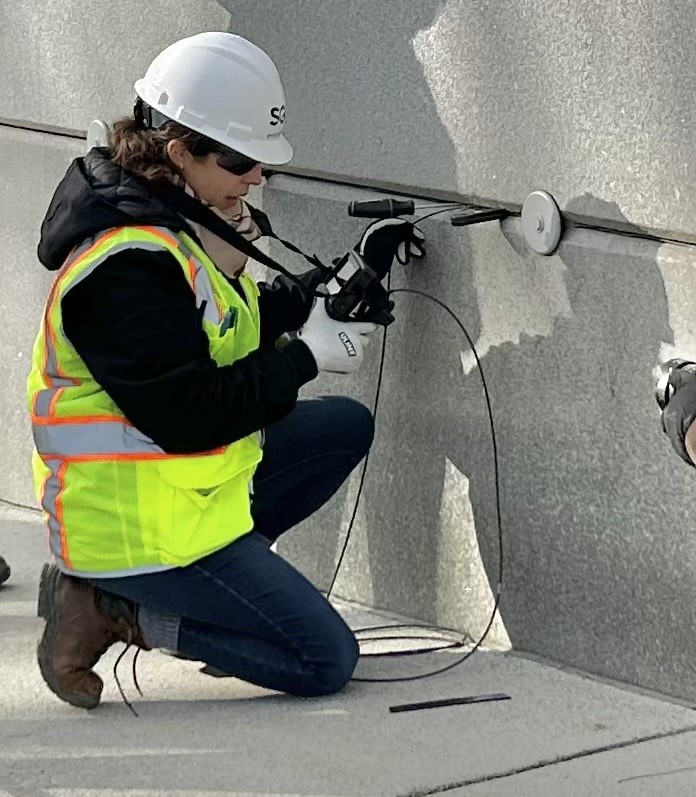
The advent of dimension stone cladding in the 20th century introduced the practice of designing lighter and more economical wall systems with increased architectural flexibility when compared to their predecessor, the solid stone masonry wall. However, unlike mass masonry construction, dimension stone cladding relies on an anchorage system, which is often concealed, to secure the stone in place and transfer loads on the facade to the building structure. Although dimension stone cladding is a well understood and reliable facade system, it is not immune to deleterious effects that can compromise the structural integrity of the stone or its anchorage. Exterior visual facade surveys can identify the presence of damage on the face of the stone, however the potential for concealed damage on the backside of the stone or to the anchorage within the exterior wall cavity sometimes creates a need for those who assess and investigate existing facades to use a wide range of methods to understand conditions that do not manifest themselves on the exterior face of the stone.
Exploratory destructive openings in the wall are a tried-and-true method to expose concealed conditions for observation, and both localized openings and full panel removal are approaches that are often incorporated in facade assessment programs. However, nondestructive and minimally destructive methods (which are referred to herein collectively as minimally destructive) can also bring efficient and practical benefits to a facade assessment. To that end, a combination of modern technology and conventional assessment techniques exists for facade professionals to select the tools and methods suited for a particular assignment, and each has merits, drawbacks and considerations worth understanding.
Publisher
Stone World