Blog
June 22, 2026

This June, Simpson Gumpertz & Heger (SGH) celebrates both Pride Month and International Women in Engineering Day (23 June 2026)—two important events highlighting identity, inclusion, and impact. Together, they recognize diverse voices that shape and strengthen our community at SGH. We sat down with SGH Project Consultant Giuliana Zarada to reflect on her experiences, what the celebrations mean to her, and how they influence her engineering journey.
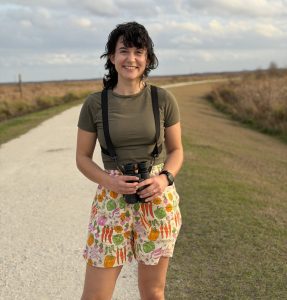 Pride is about celebrating your authentic self and honoring the people who have come before you. I feel like it’s important because it’s not just a celebration, it’s also a reminder of where we’ve come from, and how far we still have to go.
Women in Engineering Day is all about recognizing the achievements of the women who paved the way, as well as the women who are currently shaping the industry. It’s wonderful to see powerful female leaders who move progress forward, but there are also many people who have gone unrecognized in the past, and it’s important to bring those stories to light and share them.
 The people at SGH do a great job supporting both Women in Engineering Day and Pride. Much of the impact comes from our Employee Resource Groups (ERG) and employee volunteer groups who collectively bring people together. I’m looking forward to celebrating Pride with my colleagues at a happy hour, because, to me, the most important part of celebrating is coming together, sharing joy, and strengthening that sense of community.
I didn’t always know I wanted to be an engineer. I originally planned on becoming a teacher, and luckily, teaching is still a big part of my job today. In high school, my physics teacher told me I excelled in the class and encouraged me to consider engineering as a career. My dad is an engineer, but I still wasn’t sure at first. Knowing that my teacher believed in me and saw that potential was enough to encourage me to pursue this path.
Since then, I’ve seen meaningful progress for women in engineering. When I was in school, women made up about a third of my class, which was a record at the time. Now, it’s closer to half. That shift shows how important the pipeline is. We have to keep creating opportunities for women to see themselves in this field. I’ve also been inspired by seeing women advance into leadership roles, including SGH’s first female principal promoted in the Structural Engineering group. Seeing that kind of representation—and hearing women leaders share their experiences—is both motivating and a reminder of how much progress is possible.
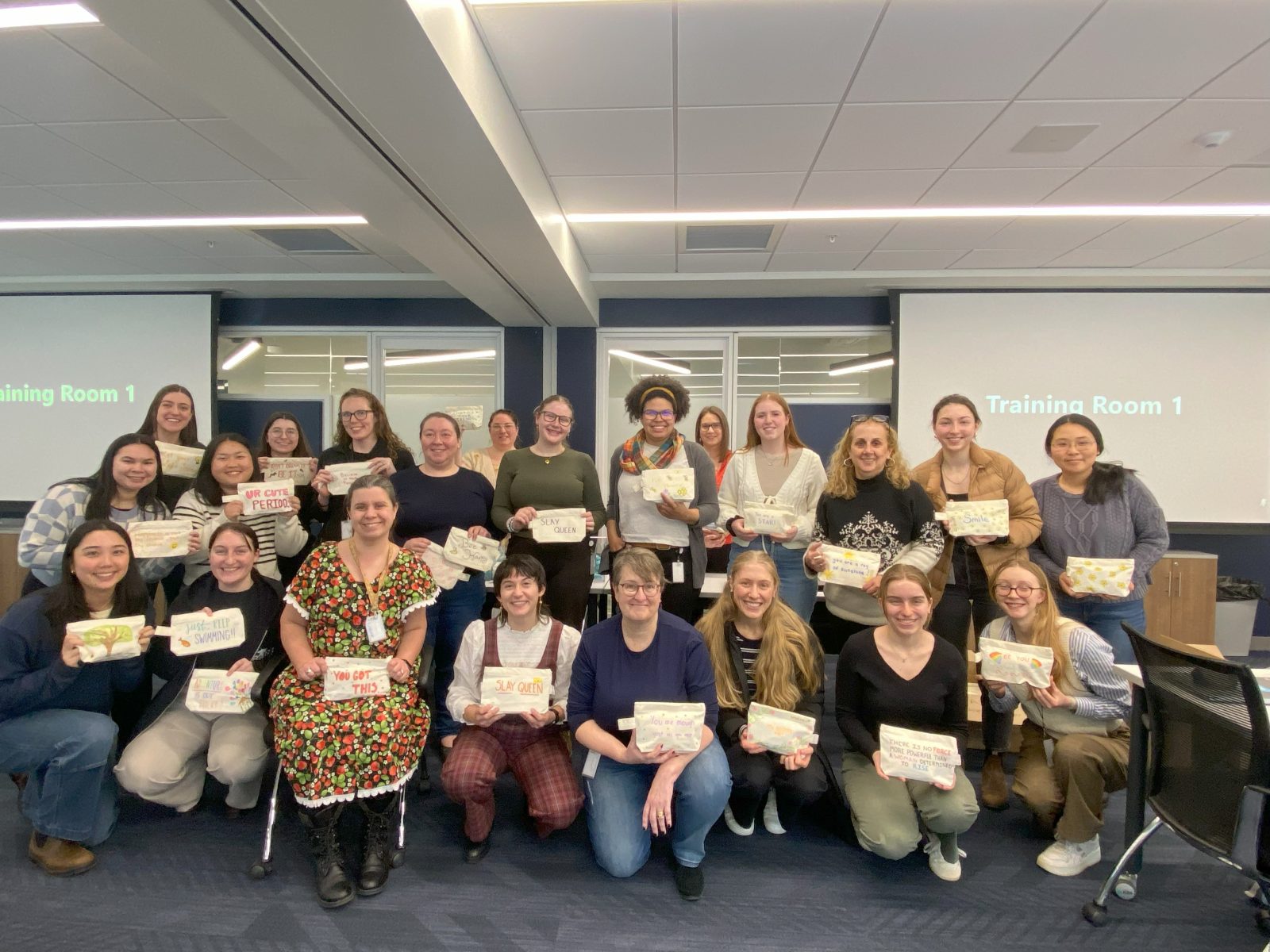
I’m part of SGH’s Volunteering Committee and we regularly organize events to support different communities. We have an event coming up with The North Shore Alliance for LGBTQ+ Youth (NAGLY), where we’ll assemble after-school care kits so kids have something to take with them from a safe space.
We also support women in science, technology, engineering, and math (STEM). I’m looking forward to an event with the Science Club for Girls in Cambridge, helping build kits, so young girls can explore STEM and hopefully grow into future engineers.
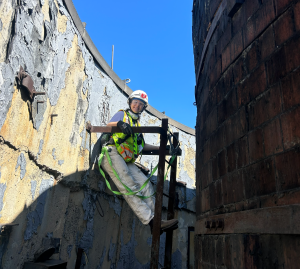
Giuliana at a smokestack inspection.
 I’ve faced challenges both because I’m young and because I’m a woman. Early on, I was at a job site and noticed a column foundation had been poured incorrectly. I pointed it out to the contractor and offered repair details, but he dismissed it. Knowing something was off, I called my supervisor, Mike Hughes, showed him the issue, and he confirmed I was right and encouraged me to stand my ground. His support meant a lot—it reinforced that I can trust my judgment and have people in my corner for backup if I need it.
Groups like SGH’s DEI Council and ERGs do a great job creating space to come together and share ideas. A lot of it comes down to advocating, bringing ideas forward, and staying committed—even if change takes time. I’ve seen progress firsthand, like when SGH added fertility benefits to support a wide variety of families.
A workplace is inclusive when you’re comfortable bringing your whole self to work. I’ve always felt that I’m in a safe space at SGH. I’m not afraid to talk about my life, my wife, and what I do outside of work. At the end of my initial interview, Mike Tecci (late SGH Associate Principal), asked me why I really wanted to move from Georgia to Boston. I was nervous, but when I shared that my partner was here, Mike responded without judgement, immediately making me feel safe, supported, and able to trust him from then on.