Assessing Fire-Damaged Metals: Metallurgical Approaches for AEC Professionals
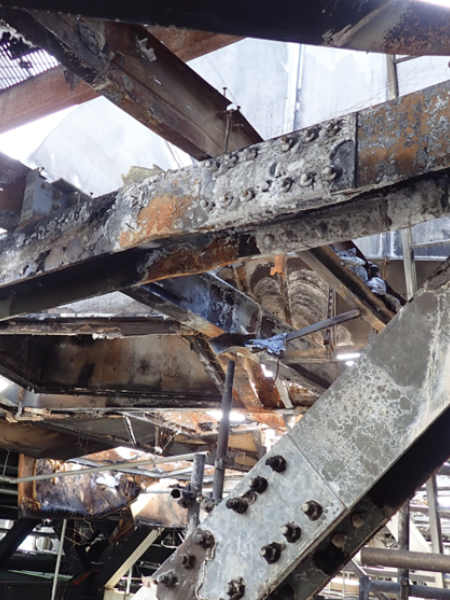
Metallurgy plays a crucial role in evaluating structures and systems exposed to fire, yet its importance is often overlooked in the broader AEC industry. After a fire, assessing the safety and integrity of metals—from structural steel and fasteners to piping and fire suppression systems—is complex, requiring deep knowledge of how elevated temperatures and environmental conditions affect material properties. In this webinar, we will share insights from real-world investigations to highlight key considerations in fire damage assessment from a metallurgical perspective. We will also explain how metallurgical analysis helps determine whether components should be repaired or replaced, and what failure modes can tell us about the origin and progression of a fire. We will also explore common causes of fire suppression system failures, including corrosion and mechanical stress, and offer a framework for evaluating fitness for service.
LEARNING OBJECTIVES
After attending this webinar, participants will be able to:
- Identify how fire exposure alters the mechanical properties of metals in structural systems.
- Recognize indicators of fire-induced damage versus damage caused by suppression efforts.
- Understand common causes of fire suppression system failures, including corrosion mechanisms.
- Learn how metallurgical investigations contribute to determining fire origin and assessing fitness for service.
Participants will earn 1.0 AIA CES Learning Unit (LU/HSW) for attending the webinar. Registration is free. Please note that space is limited – email events@sgh.com to join our waitlist if the session is closed when you register.
About the Speaker

Dustin Turnquist is a recognized leader in metallurgy and materials science, specializing in failure analysis, product performance, and materials selection across various industries. With deep expertise in corrosion, fatigue and fracture characterization, and root-cause analysis of complex material failures, he leads large-scale investigations into significant failures and losses, spanning aerospace, automotive, power generation, healthcare, and heavy industry. His leadership in multifaceted teams enables him to solve complex engineering challenges that integrate mechanical, chemical, and materials engineering disciplines. Dustin’s work helps deliver rigorous scientific analysis with practical, real-world solutions that help organizations understand and prevent material failures.
 View All Events