California Reimagined: Introducing Adaptive Reuse and Repositioning (Series Part 1)
Join us for this five-part series on adaptive reuse and repositioning projects in California. Each 90-minute webinar will bring together engineers, architects, developers, and other AEC experts to share practical insights and real-world examples.
Adaptive reuse and repositioning offer powerful opportunities to breathe new life into existing buildings, address housing and community needs, and reduce the environmental impact of new construction. Yet determining whether a building is a good candidate—and how best to transform it—requires a clear understanding of the technical, regulatory, and planning considerations that shape these early decisions. This session introduces the foundational concepts behind adaptive reuse in California, highlighting the benefits, challenges, and key questions project teams must confront from the outset.
Our panel will explore what defines adaptive reuse versus repositioning, how teams approach initial assessments, the sustainability implications of reusing structures, and the building characteristics that make adaptive reuse a viable option. Speakers will discuss common code triggers related to structural, energy, and life safety upgrades; the growing influence of CALGreen and embodied carbon requirements; and the evolving set of tax incentives and city-level programs aimed at supporting conversions. Attendees will gain a grounded understanding of the conditions, constraints, and drivers that set the stage for successful adaptive reuse projects in California.
LEARNING OBJECTIVES
After attending this session, participants will be able to:
- Distinguish between adaptive reuse and repositioning and understand how each approach shapes project goals, scope, and feasibility.
- Identify key considerations in early assessments, including structural, enclosure, fire life safety, and sustainability factors that influence project viability.
- Recognize common code triggers and regulatory implications for adaptive reuse in California, including structural, energy, and fire life safety upgrades.
- Understand how emerging policies, incentives, and embodied carbon requirements influence decision making and support adaptive reuse as a sustainable development strategy.
ABOUT THE SERIES
California Reimagined: Adaptive Reuse and Repositioning Insights for the Built Environment
Adaptive reuse—the practice of transforming existing buildings for new purposes—has become an increasingly essential strategy in California for meeting housing needs, revitalizing communities, and reducing the environmental footprint of new development. But as owners, developers, and project teams lean into these projects, they also encounter a distinct set of technical, regulatory, and economic challenges. Existing buildings often come with hidden conditions, legacy systems, and complex code triggers. Upgrading them for new occupancies—especially housing—can require expensive structural, accessibility, and life-safety improvements. At the same time, the financial math of adaptive reuse is often tight, forcing teams to solve problems with creativity rather than capital.
These constraints shift how decisions get made. They affect when to preserve versus replace, how to sequence investigations and evaluate which improvements meaningfully reduce risk, and where performance-based approaches can offer flexibility without compromising safety. Adaptive reuse projects demand interdisciplinary collaboration, inventive detailing, and a willingness to revisit assumptions when field conditions, budgets, or agency feedback change. The work sits at the intersection of preservation, modernization, and long-term resilience—but it also depends on navigating feasibility in a cost-constrained reality.
In this five-part webinar series, we bring together engineers, architects, developers, investment professionals, and other experts to explore the evolving landscape of adaptive reuse in California. Through engaging discussions and real-world case studies, the series will examine crucial themes—from early feasibility and historic-building considerations, to office-to-residential conversions, code implications for contemporary structures, and the integration of new amenities into existing buildings. Attendees will gain practical insights, learn about emerging policies and local processes, and hear a range of perspectives on how to approach these projects with both pragmatism and imagination.
Join us for the rest of the series: 
- Wednesday, January 14: Introducing Adaptive Reuse and Repositioning (Part 1)
- Wednesday, January 21: Preserving Historic Buildings (Part 2)
- Wednesday, January 28: Overseeing Office-to-Residential Conversions (Part 3)
- Wednesday, February 4: Adapting Contemporary Buildings (Part 4)
- Wednesday, February 11: Adding Amenities and Repurposing Spaces in Existing Buildings (Part 5)
Participants will earn 1.5 AIA CES Learning Unit (LU/HSW) for attending the webinar. Registration is free. Please note that space is limited – email events@sgh.com to join our waitlist if the session is closed when you register.
About the Speaker
Andrea Bono is a building enclosure consultant specializing in designing, investigating, and rehabilitating commercial, health care, educational, civic, hospitality, residential, and Leadership in Energy and Environmental Design (LEED) buildings. Her projects include the adaptive reuse of a manufacturing facility listed on the National Register of Historic Places, which was converted into a LEED Silver-certified office space. Andrea also worked on the renovation and conversion of historical buildings to a LEED Gold-certified archaeology center. She completed the Sustainable Design Professional Program at UC Berkeley and is a LEED Accredited Professional. She applies her diverse expertise, experience, and education to design high-performance buildings, advocate for sustainable strategies, and guide projects to certified performance. Andrea serves as SGH’s Corporate Environmental Stewardship Champion and is an active member of the AIA San Francisco Committee on the Environment (COTE) and her local school district’s Sustainability Advisory Committee. Andrea also volunteers for Rebuilding Together, a national non-profit that provides safe and healthy housing.
Omgivning
Karin Liljegren has dedicated her career to community building, sustainability, and advocacy by embracing adaptive reuse as a powerful means to revitalize our cities. For over 24 years, Karin has focused on adaptive reuse projects and advocates for policy reform to make the repurposing of older buildings more financially viable and cornerstones of their communities. For Karin, adaptive reuse represents the potential to solve four challenges: address the housing shortage, combat climate change, preserve cultural heritage, and tackle the oversupply of vacant office buildings. Karin founded the architecture and interior design firm Omgivning in 2009. Today, she and her staff have touched over 500 buildings, drawing on a rich existing landscape to create programmatically and technically complex hotels, multifamily housing, restaurants, bars, creative offices, and theaters, often with custom furniture to match. Karin is a Fellow of the American Institute of Architects and active with the AIA Los Angeles Chapter. Through Urban Land Institute, she serves on the National Redevelopment and Reuse Council and the Local Innovation and Housing Councils. Karin also sits on the board of the Los Angeles Conservancy and chairs the Advocacy Committee and is involved with advocacy organizations such as the Central City Association as an adaptive reuse leader.
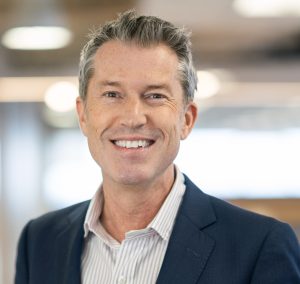
Nate Wittasek has extensive experience working in the fire protection and regulatory arenas. He brings a practical approach to the fire protection engineering field that reflects his diverse training and experiences in academia, codes consulting for both new and existing facilities, performance-based fire protection engineering, sustainable design, wildland interface fire protection, and the fire service. His experience includes failure analysis, fire engineering, systems design, and building codes consulting for commercial and infrastructure projects in North America, Europe, Asia, and the Middle East. Nate specializes in fire life safety systems and approaches that are used in assembly venues, tall buildings, cultural heritage facilities, and historic structures.
 View All Events