Understanding the Chicago Facade Ordinance
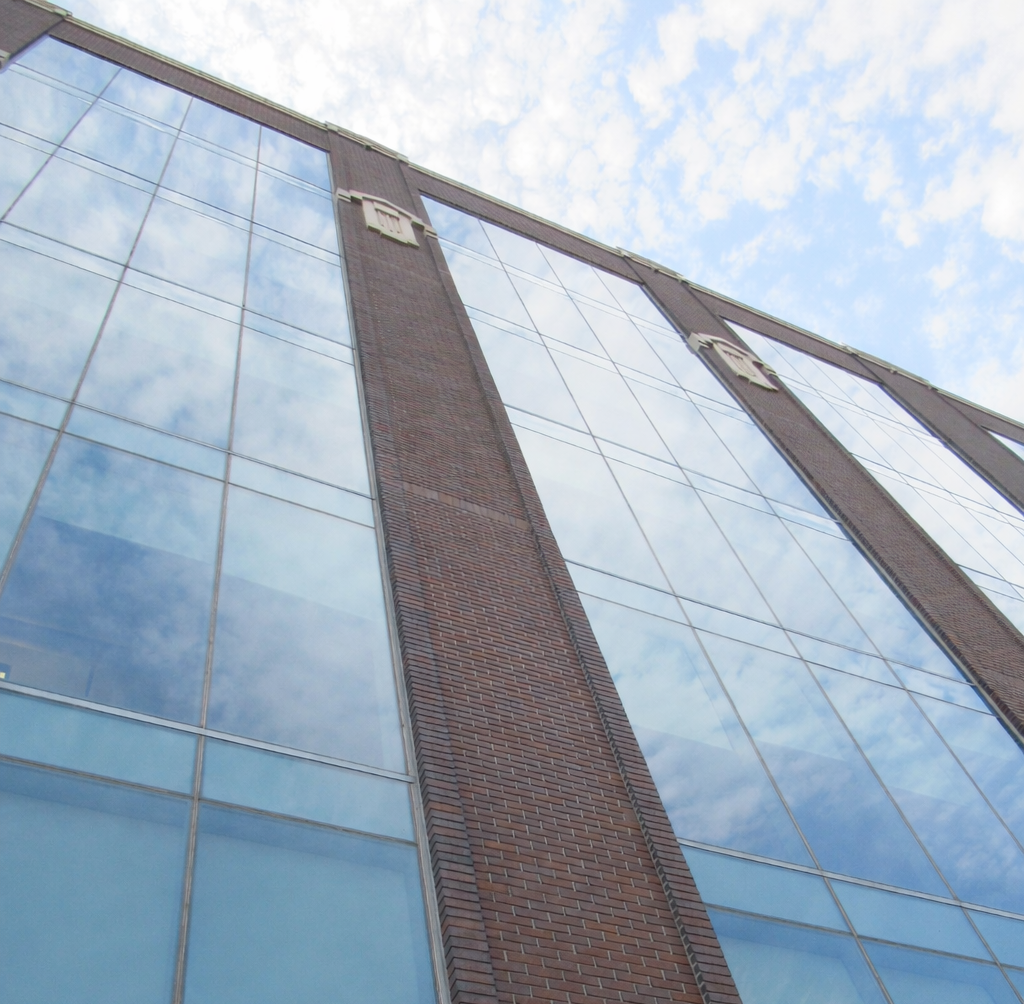
Chicago is renowned for its architecture, with titans of the design world leaving their mark on the city with a variety of approaches and materials. While newer buildings increasingly emphasize sleek, modern glass-and-metal designs, a wide variety of materials define Chicago’s architectural landscape, including brick masonry, stone, terra cotta, and concrete.
Regardless of age or construction type, buildings require ongoing maintenance to preserve the integrity and safety of their facades. To manage this, the Municipal Code of Chicago and City of Chicago Rules Regarding the Maintenance of High-Rise Exterior Walls and Enclosures require routine systematic facade inspections and repair planning. Understanding these requirements and engaging a Licensed Professional to inspect and maintain building facades is essential for owners to protect the public.
The rules establish two compliance paths:
- Critical Examination and Ongoing Inspection Program: Comprehensive, close-up inspections at representative areas of the building facade performed on a 4- to-12-year cycle, depending on enclosure type, and visual inspections performed at the midpoint between close-up inspections.
- Ongoing Inspection and Repair “Short Form Only” Program: Non-close-up, visual inspections performed every two years.
FACADE ORDINANCE REQUIREMENTS
The ordinance has the following requirements:
- Scope: Exterior facades of all buildings 80 feet or taller (roughly 7 to 8 stories).
- Inspector: The inspection must be performed by or under the direct supervision of a qualified Licensed Professional retained by the owner. A qualified professional is an architect or structural engineer licensed in the State of Illinois.
- Report: The inspector must prepare a signed and sealed written inspection report documenting the exterior walls’ condition and recommendations for repair where deficiencies are found, and submit the report to the city. The report must characterize the building in one of three categories: 1) Unsafe and imminently hazardous; 2) Safe with a repair and maintenance program; or 3) Safe.
- Filing: Pay the filing fee and submit two paper copies of the report to the city.
REPORTING TYPES AND FREQUENCIES
The ordinance describes two compliance paths: the Critical Examination and Ongoing Inspection program and the Ongoing Inspection and Repair “Short Form Only” program. The owner and Licensed Professional will jointly determine the appropriate inspection path based on the building’s condition and history.
Critical Examination and Ongoing Inspection Program
A critical examination is required if any of the following criteria apply:
- The building is vacant and subject to registration. Refer to the Chicago Municipal Code for more information.
- The building is subject to an active case, an outstanding order of compliance, or a consent decree by the Chicago Department of Administrative Hearings or the Circuit Court of Cook County. Refer to the Chicago Municipal Code for more information.
- The building has been classified as “unsafe and imminently hazardous” in the most recent filed report.
- The owner is more than one year delinquent in filing an Ongoing Inspection and Repair “Short Form Only” report if previously using that compliance path.
The required critical examination frequency is determined by the building category, which reflects the facade’s primary reinforcement and the materials it directly contacts. Ongoing inspections are also required at the midpoint of the critical examination cycle. The table below describes the required facade inspection frequency for buildings performing critical examinations.
| Building Category and Description | Ongoing Inspection Due Date: 1 November |
Critical Examination Due Date: 1 December |
| I: Non-corrodible metal | Every 6th year after submission of a critical examination report | Every 12th year following the last submitted critical report |
| II: Corrosion-resistant metal or protected corrodible metal | Every 4th year after submission of a critical examination report | Every 8th year following the last submitted critical report |
| III: Corrodible metal | Every 2nd year after submission of a critical examination report | Every 4th year following the last submitted critical report |
| IV: Adhesive bond or masonry headers | Every 4th year after submission of a critical examination report | Every 8th year following the last submitted critical report |
Ongoing Inspection and Repair “Short Form Only” Program
Buildings are eligible to enter the Ongoing Inspection and Repair “Short Form Only” program after completing a critical examination if none of the criteria for the critical examination above apply. This program allows buildings to complete ongoing, visual-only inspections every two years. The first “Short Form Only” ongoing inspection report is due two years after the critical examination, and no future critical examinations are required unless the facade is found to be in an unsafe and imminently hazardous condition. Owners of new buildings can enter the “Short Form Only” program without first performing a critical examination by completing an ongoing inspection within two years of the initial occupancy date.
CONDUCTING CRITICAL EXAMINATIONS
A critical facade examination includes the following activities:
- Review available drawings, specifications, and previous reports, including facade maintenance logs.
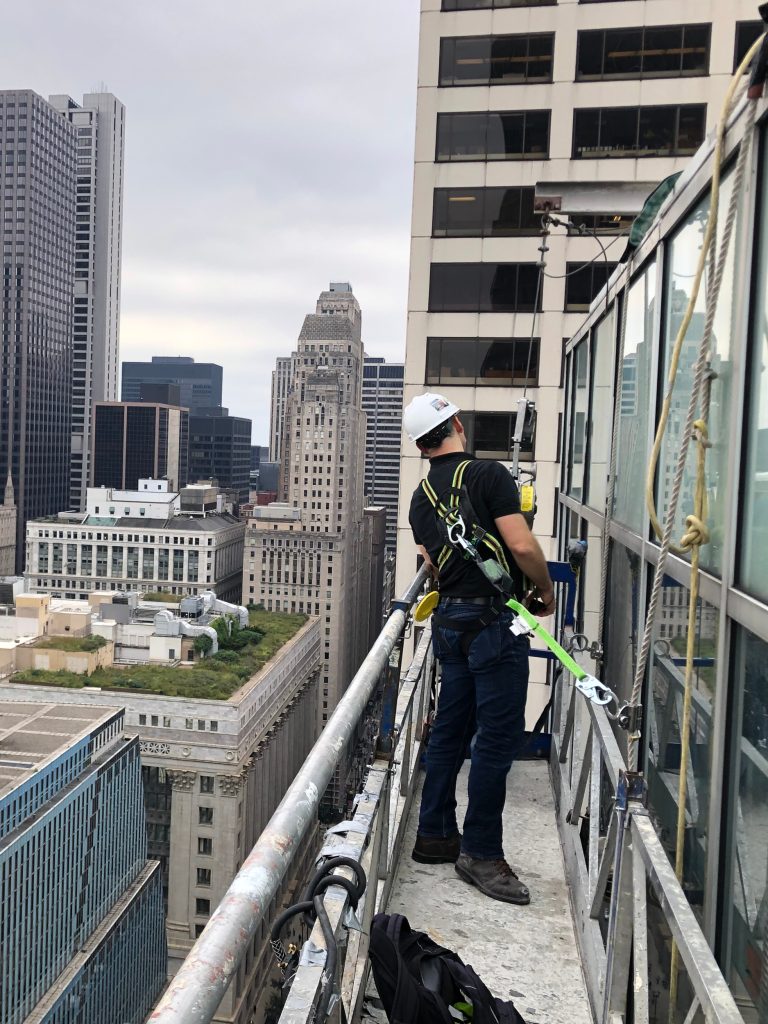
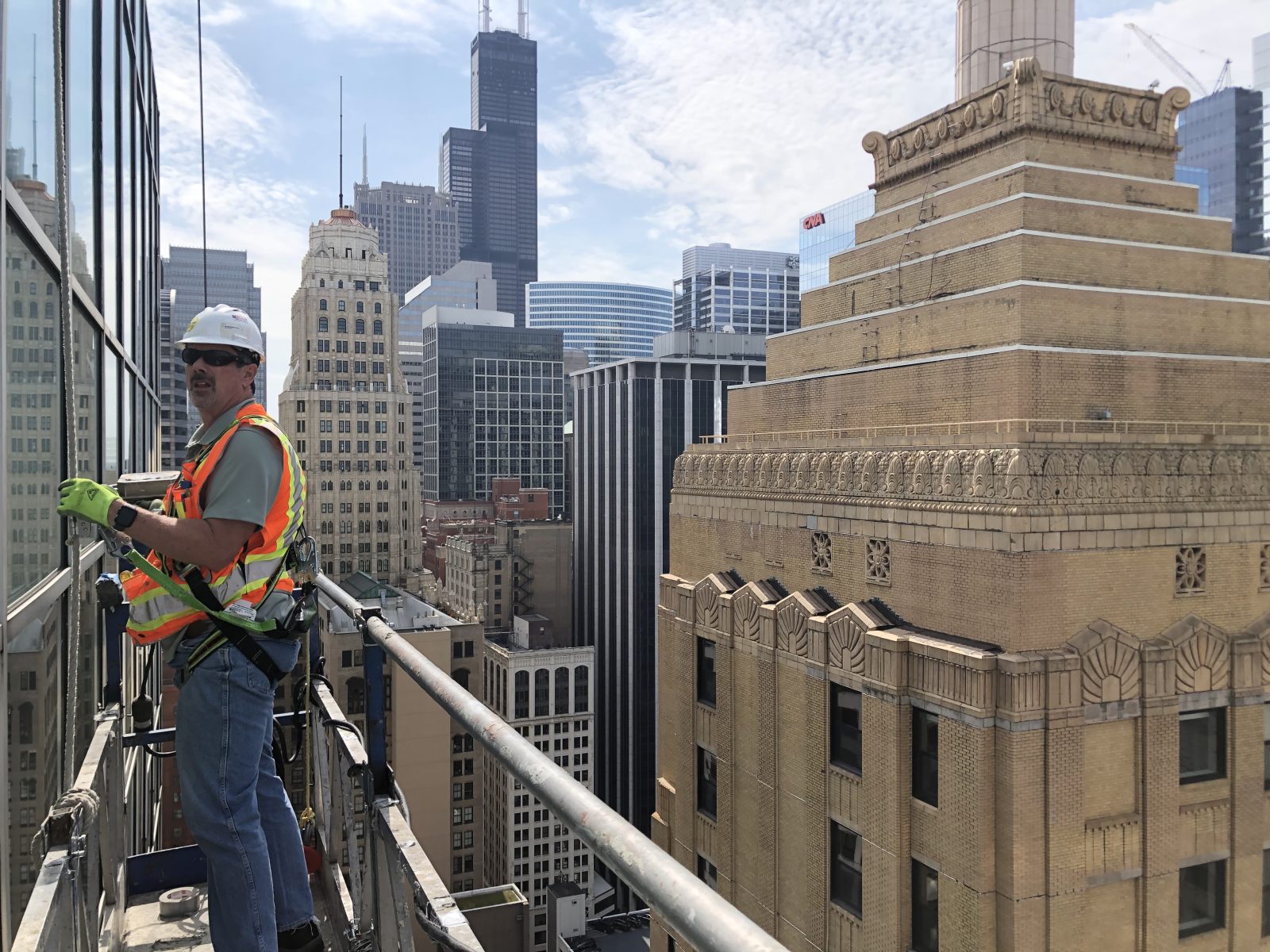
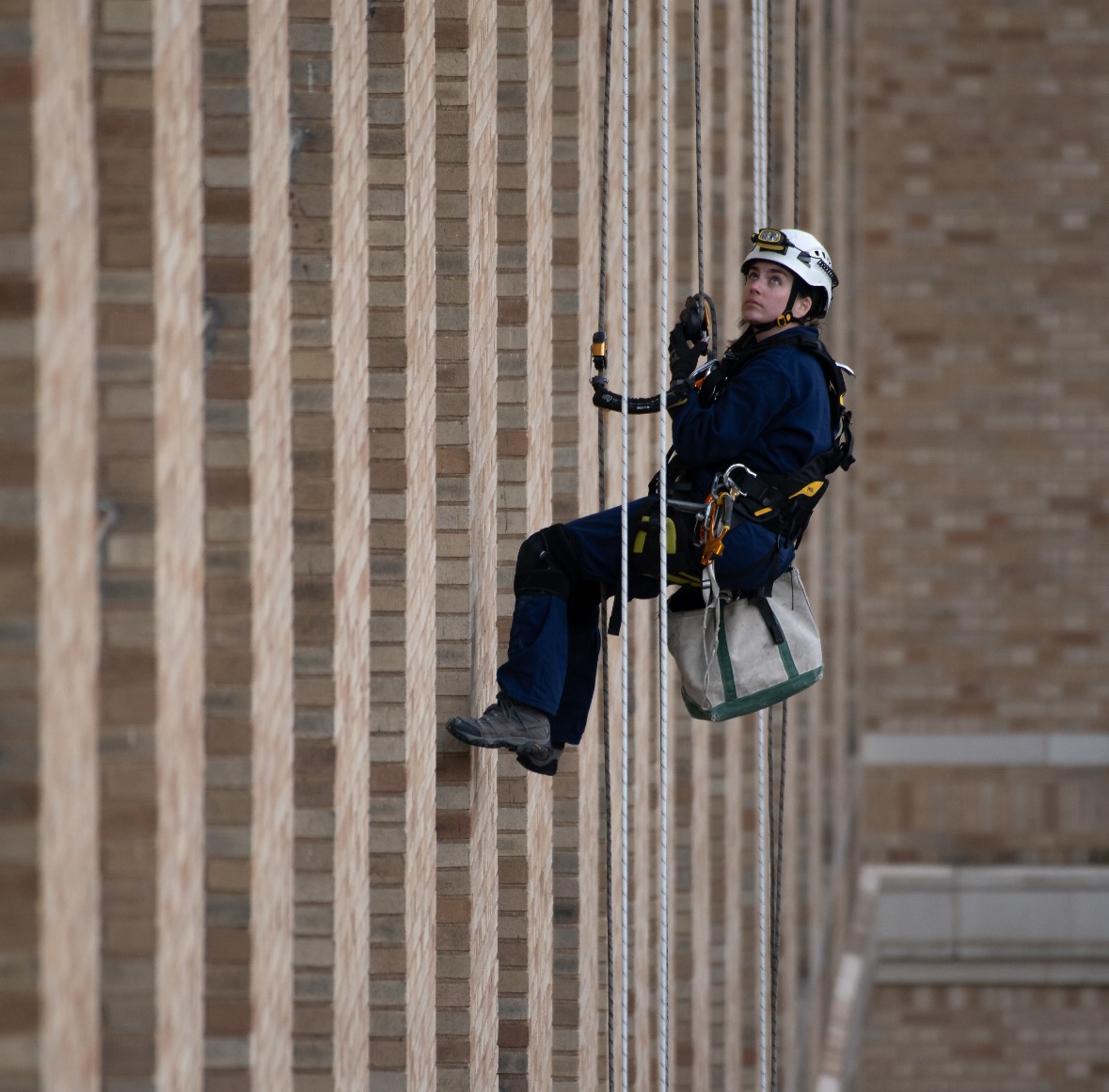
- Conduct a close-up visual examination on a minimum of one representative section, spanning at least 24 ft. in width, on each elevation above a public way. Inspection drops are performed from suspended scaffolds, also known as swing stages. The Licensed Professional may elect to perform an up-close and hands-on review of additional areas of the building. Public ways include public streets, alleys, sidewalks, rights of way, and parks, as well as private areas of buildings regularly accessed by occupants, such as rooftop terraces, amenity decks, and uncovered parking areas.
- Create inspection openings for buildings fifty years or older comprised of masonry, stone, or terra cotta cladding affixed to the building with concealed corrodible or corrosion-resistant metal fasteners.
- Inform the Commissioner of Buildings immediately when “unsafe and imminently hazardous” conditions are identified. Develop a repair plan and schedule to address these conditions.
- Prepare and submit a stamped and signed report.
Because critical examinations occur infrequently, building owners should anticipate uncovering unknowns during these inspections. Inspection openings, as described above, can potentially reveal concealed issues even where there is no externally visible deterioration or distress. Repair work, including the stabilization of any identified hazardous conditions, can be performed concurrently while performing critical examinations.
CONDUCTING ONGOING AND “SHORT FORM ONLY” INSPECTIONS
Ongoing and “short form only” inspections include the following activities:
- Review available drawings, specifications, and previous reports, including facade maintenance logs.
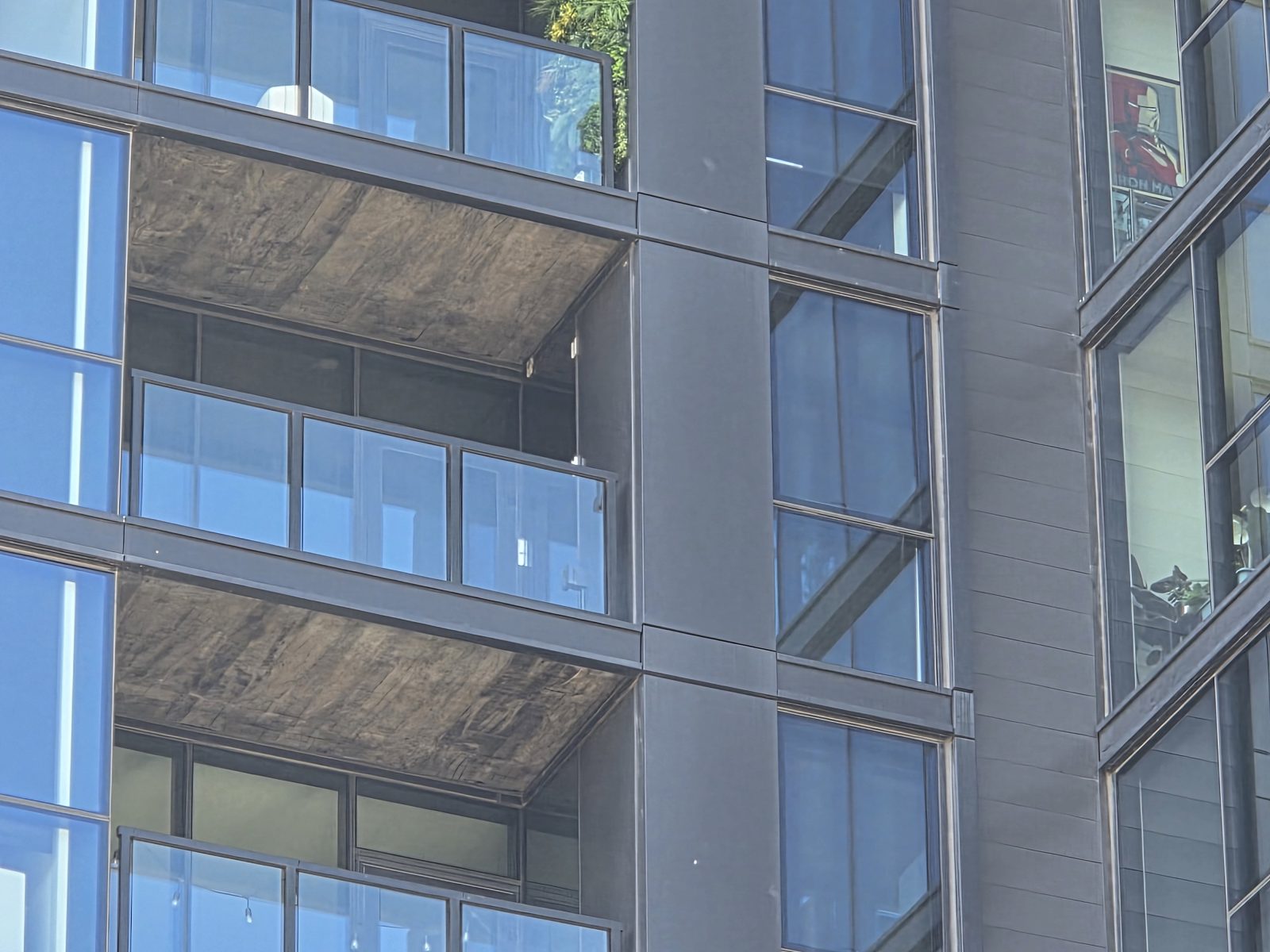
- Use binoculars to visually observe all exterior elevations for large-scale problems from grade and other accessible locations, such as lower roofs and balconies. For taller buildings or facades with limited visibility, visual inspection alone may be inadequate to spot all loose and hazardous materials. Other inspection methods, such as drone photography or limited close-up inspection from an aerial lift, suspended scaffolding, or rope access, may be necessary.
- Inform the Commissioner of Buildings immediately where “unsafe and imminently hazardous” conditions are identified. Develop a repair plan and schedule to address these conditions.
- Prepare and submit a stamped and signed report.
LIMITATIONS
The facade ordinance is intended to complement the building owner’s ongoing efforts to maintain and preserve the exterior enclosure and is designed to identify visually apparent “unsafe” or “imminently hazardous” conditions, but does not include measures to detect all underlying or concealed distress.
Additionally, these programs do not require further investigation to determine the root cause of observed deterioration. It is the owner’s responsibility to engage a Licensed Professional to develop a plan for investigating the full extent of deterioration after any visibly distressed areas have been stabilized.
COMMON QUESTIONS
Is a critical examination required for a new building?
New buildings are eligible to enter the Ongoing Inspection and Repair “Short Form Only” program, without completing a critical examination, by completing an ongoing inspection within two years of initial occupancy.
For critical examinations, do elevations above alleys, terraces, and roofs require hands-on inspection?
The City of Chicago Rules Regarding the Maintenance of High-Rise Exterior Walls and Enclosures require drops above each elevation above a public way for critical examinations. Public way is defined as a public street, alley, sidewalk, right of way, or park. Elevations above building spaces accessible and regularly used by occupants, such as amenity decks, rooftop terraces, and uncovered parking, also require drops. Elevations above roofs that are not accessible or regularly accessed by occupants do not require drops.
I am unsure when the last facade inspection was performed on my building. What type of inspection is required?
The City of Chicago Department of Buildings maintains a record of inspections by address. We recommend reaching out directly to inquire about inspection history and what type of inspection is required. Consider all prior addresses the building may have used when requesting records.
Which building category does my facade fall under?
Below, we summarize the rules’ definition of each building type and associated materials, and provide common examples.
- Category I: Buildings with facades that are primarily reinforced with, or are in contact with, non-corrodible metal (stainless steel, aluminum, and other metals that do not corrode under atmospheric conditions). Common examples include aluminum-framed curtain wall or window wall facades and aluminum or stainless steel cladding panels with non-corrodible attachments.
- Category II: Buildings with facades that are primarily reinforced with, or are in direct contact with, either corrosion-resistant metal (corrodible metal that is galvanized, epoxy coated, or painted specifically to resist corrosion with that finish intact) or corrodible metal (unprotected carbon steel, shop-primed steel, uncoated reinforcing bars, and other metals that can corrode) that is protected by flashing and corrosion-resistant metal anchors. Common examples include contemporary masonry veneer facades supported by protected corrodible or corrosion-resistant shelf angles and ties.
- Category III: Buildings with facades that are primarily reinforced with, or are in direct contact with, corrodible metal. Common examples include mass masonry walls with corrodible lintels or shelf angles, transitional masonry facades with embedded corrodible metal reinforcement, and precast concrete panels or exposed cast-in-place concrete walls reinforced with corrodible metal.
- Category IV: Buildings with facades that are primarily secured to the substrate by adhesive bond or with masonry headers. Common examples include multi-wythe masonry facades that rely on header courses for structural interlock, adhered masonry systems (e.g., thin brick, thin stone, or tile), or exterior insulation and finish systems (EIFS).
If your building type is unclear, we recommend reviewing previous facade inspection reports to verify the previously reported building type, or working with a facade consultant to determine the appropriate building type and associated inspection requirements.
What happens if hazardous conditions are found on my building during a facade inspection?
It is advantageous to address hazardous conditions during the facade inspection, particularly if a contractor has mobilized to assist with the facade inspection access, so the condition can be made safe immediately and costs for remobilization can be mitigated. If these hazardous conditions are addressed during the inspection, the building may be classified as “safe with maintenance.” When hazardous conditions cannot be immediately addressed, a repair plan and schedule must be developed, and the building must be classified as “unsafe.”
A critical examination is required for my building in the calendar year. When should I schedule a critical examination?
We recommend engaging with a Licensed Professional in the spring to ensure the inspection and reporting can be completed by the 1 December filing deadline. This typically provides sufficient time to schedule required building access (e.g., staging for elevated mobile platforms), if required.

NEXT STEPS
When a building’s prior inspection reports are unavailable, we recommend that owners reach out directly to the City of Chicago Department of Buildings. Owners can partner with a qualified facade consultant like SGH to discuss the required next steps to identify engineering inspection needs and related contractor support services. SGH can perform the required inspection and deliver a report complying with the facade ordinance requirements.
Beyond the facade inspection and accompanying report, SGH can also help owners address conditions identified in the inspection by establishing repair details, installation procedures, and appropriate materials.
Additional Resources
For more information about these requirements, visit the following links: