Preparing for New Energy Code Requirements in New York City
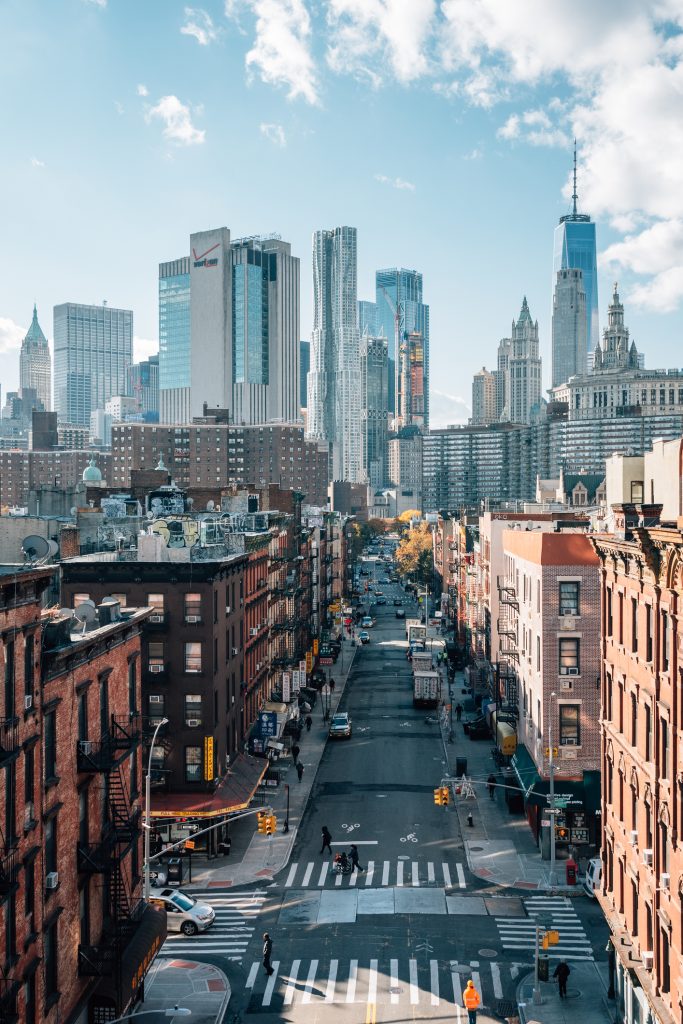
New York City is preparing to adopt an updated energy code that will be more rigorous than the state-level code. The updated 2025 New York City Energy Conservation Code (NYCECC) will take effect on 31 December 2025, aligning with the New York State code adoption date. However, the NYC Department of Buildings will not enforce the new code until updated compliance software becomes available, which is expected by March 2026. Looking ahead, project stakeholders must either submit filings under the 2020 NYCECC by March or update documents to comply with the new 2025 NYCECC provisions.
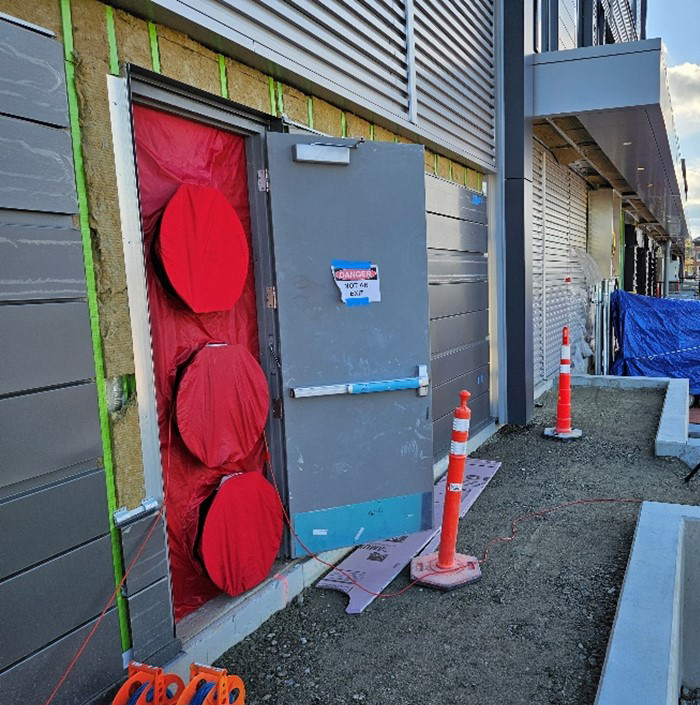
Blower door setup for air leakage testing.
Because the NYCECC mandates stricter requirements than the 2025 New York State Energy Conservation Construction Code, it is essential for project teams to understand the updated requirements in advance to avoid project delays and achieve compliance. To begin preparing for the new requirements, we looked through the 2025 NYCECC amendments to highlight several of the significant changes related to building enclosures.
What’s New in the NYCECC for Building Enclosures?
The 2025 NYCECC introduces a series of updates designed to enhance clarity and organization, as well as strengthen performance and testing requirements. Key changes include:
- Renaming “Appendix CA” to “2025 NYC ASHRAE 90.1” for clarity.
- Removing historic building exemptions. Instead, project teams must submit reports prepared by a registered design professional to justify deviations from code requirements.
- Expanding thermal bridging requirements and compliance options.
- Updating spandrel panel default values, along with further explanations for assemblies with metal back pans.
- Creating marginally more stringent U-factors and R-values for both opaque assemblies and fenestration.
- Making clarifications for calculating fenestration system U-factors and solar heat gain coefficients based on project-specific sizes.
- Outlining assembly U-factors for steel-framed walls by stud spacing and framing factor in a new table.
- Simplifying air leakage testing requirements with more stringent airtightness criteria and modified testing procedures.
- Introducing a new chapter with additional efficiency credit requirements.
Preparing Your Project for the 2025 NYCECC
Stakeholders have a few months to prepare for these new, stricter compliance requirements. Therefore, it’s critical for project teams to determine whether to accelerate filings before the transition date or begin redesigning for compliance under the updated code.
Overall, the NYC amendments will improve energy performance but will also introduce several design and construction challenges that can impact schedules and budgets. Partnering with experienced building enclosure consultants will help project teams navigate these complexities, optimize compliance strategies, and apply best practices throughout the process. SGH’s dedicated team of experts is ready to guide these projects and ensure a smooth and confident transition to the new code.