Publication
April 27, 2022
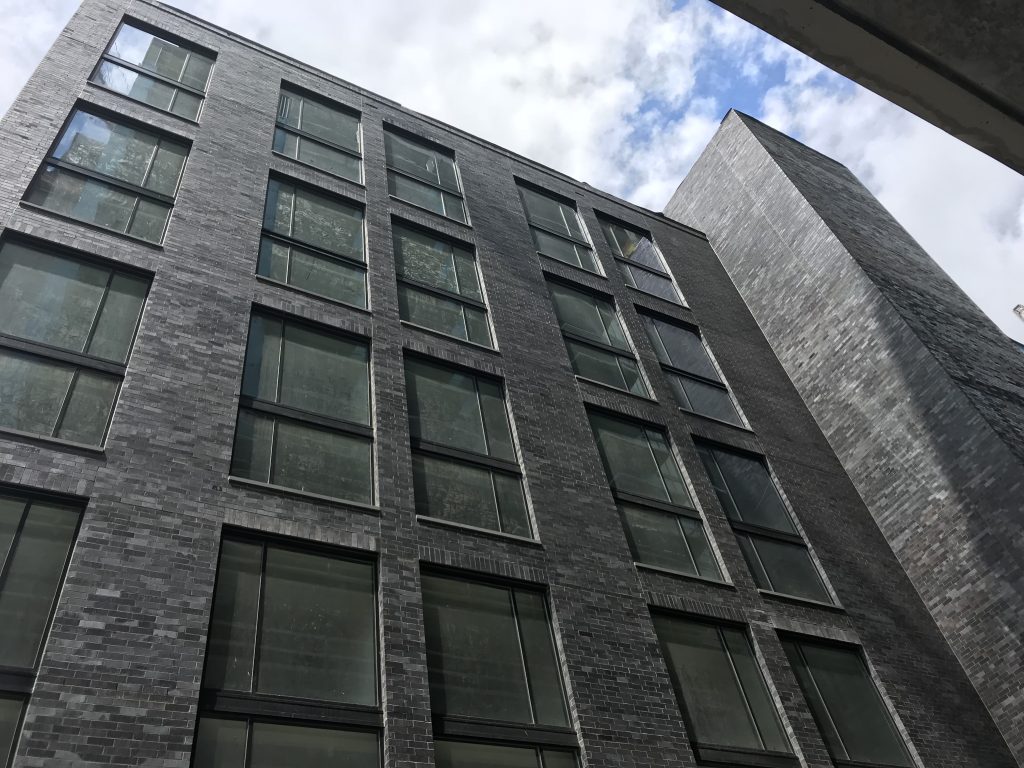
Contemporary energy codes that emphasize insulation continuity and reduced thermal bridging, together with design trends, architectural preferences, and current fenestration product options, shape building enclosure design.
Fenestration within rough opening has become a critical, complex, and evolving aspect of that design. The fenestration alignment within the rough opening (in other words, how its vertical plane is positioned relative to the adjacent cladding, insulation, and air and water barriers) not only affects thermal performance, but also the air barrier continuity, the water penetration resistance of the overall wall assembly, and the more readily apparent aesthetics of the design.
Fenestration alignment, therefore, demands early multidisciplinary design scrutiny, but the process is not always straightforward. Often, multiple interdependent, iterative, and competing interests influence fenestration alignment in the exterior wall section. These include architectural design intent, structural load path, fenestration product type (i.e. window, storefront, or curtain wall), and the proprietary characteristics of the specific product.
In this article, the authors outline a structured, holistic decision-making framework for design professionals to use as a roadmap as they navigate today’s interdependencies in fenestration alignment.
Construction Specifier