News
Topic Brief
Specifying Lower Embodied Carbon Concrete: Making Decisions at Each Step of the Project
July 7, 2026
12 Min Read

Across the world, concrete is the most commonly used structural material. This is for good reason—concrete has traditionally been a low-cost, low-tech material that is durable, resilient to earthquakes and wind loads, and relatively consistent for mix designs across applications. However, traditional concrete comes with the environmental “cost” of a large embodied carbon footprint. This high cost stems from the greenhouse gas emissions associated with its life cycle, which begins with raw material extraction and refinement and continues through transportation to construction, maintenance, and eventually demolition.
The challenge facing the architecture, engineering, and construction (AEC) industry is to find ways to reduce concrete’s embodied carbon while maintaining its structural benefits and safeguarding its performance in buildings and critical infrastructure. The construction industry has addressed similar environmental issues with concrete before, such as by reducing atmospheric alkali discharge through Environmental Protection Agency (EPA) regulations and regulating production plant pollutants through process changes.
It is essential for AEC professionals to understand the impact of embodied carbon in concrete construction and to take steps throughout the project life cycle from material selection, design, and construction to reduce concrete’s embodied carbon intensity value and meet global warming target metrics. This includes knowing and adhering to emerging laws and regulations, often at the local level, capping a project’s embodied carbon. Properly designed low-carbon concrete mixes are not inherently worse, or lower quality, than traditional concrete mixes, and intentional decisions made across the life of the project can lead to a structural element that performs well while reducing its environmental impact.
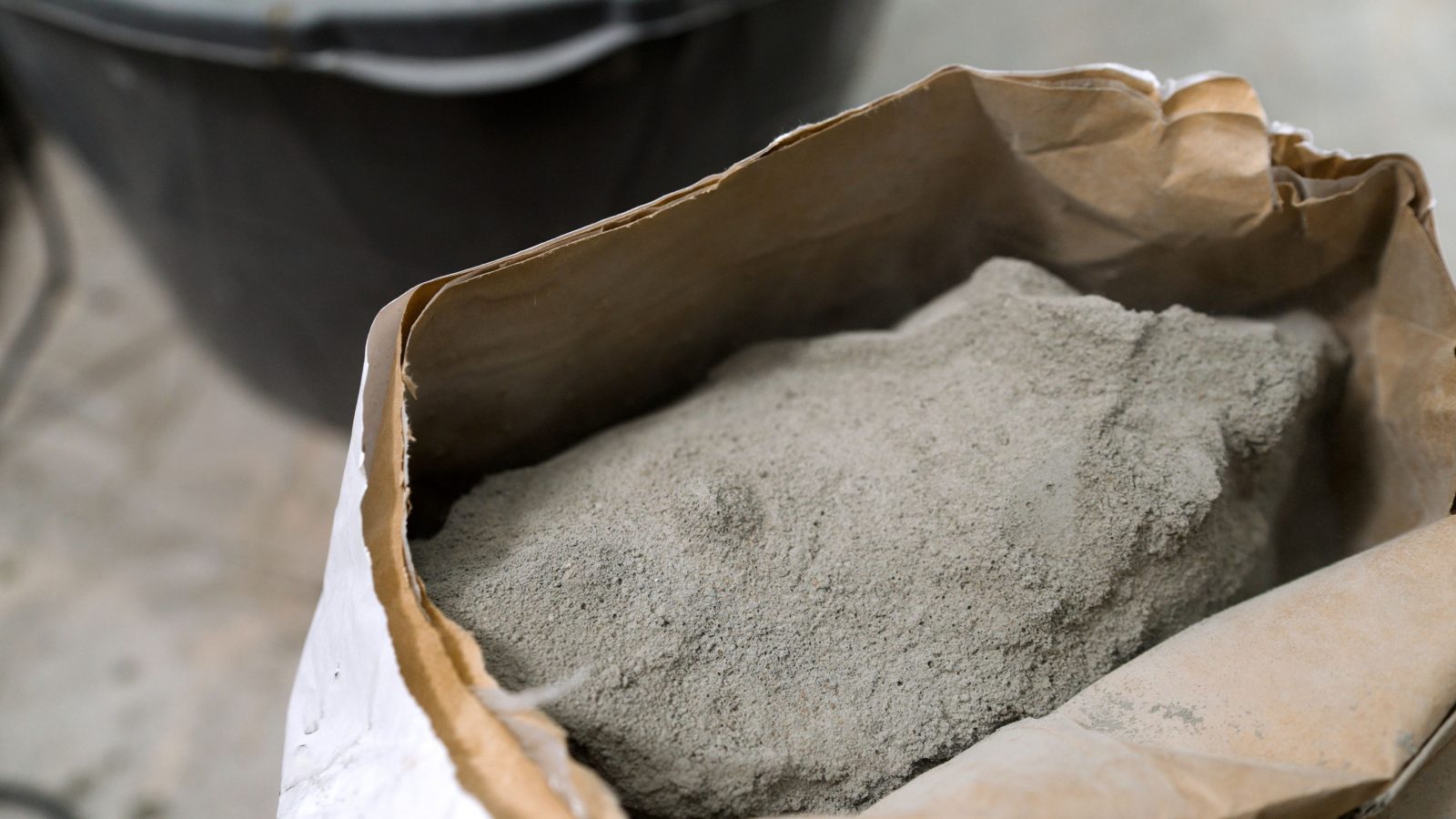
Portland cement.
Material Decisions: Understanding Cement’s Impact on Embodied Carbon
Most of concrete’s emissions come from the typical Portland cement used as the binder to provide long-term strength and durability. The cement industry itself accounts for approximately 8% of worldwide carbon dioxide emissions, according to the World Economic Forum. The largest amount of carbon dioxide emissions related to cement are released during its manufacturing stage, where enormous amounts of heat are required to initiate a chemical reaction. Reducing the amount of Portland cement used is the primary method of reducing the embodied carbon of the concrete mix. Because of this, when you hear about reducing concrete’s embodied carbon, you often hear about using supplementary cementitious materials (SCMs) to replace a portion of the Portland cement.
Using SCMs traditionally involves replacing a portion of the Portland cement with different materials like fly ash or slag that are byproducts of other industries, such as coal power production or steel production. However, the availability of these materials is highly regional, and project teams should consult with their ready-mix suppliers before specifying them. Other, newer SCMs emerging in the construction market include ASTM C1866 Ground-Glass Pozzolan and ASTM C1240 Silica Fume.
The type of cement used in a mix will also affect the embodied carbon intensity of the mix. Portland cement conforms to ASTM C150. In recent years, ASTM C595 Blended Hydraulic Cements have become widely available, and your concrete suppliers may already be using them. The most common blended cement is Type IL, which is a binary blend of finely interground limestone and Portland cement. Type IL cement is made up of up to 15% limestone (typically 10-12%), whereas C150 cement has a maximum of 5% limestone. Type IL is an engineered material, meaning that the limestone was not simply added but selected to improve the reactivity of clinker (the key chemically reactive ingredient in cement) during cement production and provide performance similar to a traditional ASTM C150 cement. By increasing the efficiency of the chemical reaction, less cement is required, which lowers the embodied carbon intensity. ASTM C595 also includes other types of blended cements, including Type IS (Blast-furnace slab and Portland cement), Type IP (Pozzolan and Portland cement), and Type IT (a ternary blend including Portland cement and two or more SCMs, slag, limestone, or pozzolan).
These material choices in a concrete mix design have tradeoffs between embodied carbon and expected performance, such as strength-gain timelines. Additionally, the local availability of materials and the capacity of existing batch facilities to handle additional materials may limit options. An important mindset to consider when evaluating potential options is confirming that the low-carbon concrete is not a lesser or inadequate version of traditional concrete with regard to strength and durability. Lower carbon concrete can behave differently at all stages and likely requires adjustments across the project and ownership teams. The good news is that many of these adjustments can be made today and collectively offer a sizeable reduction with minimal effort.
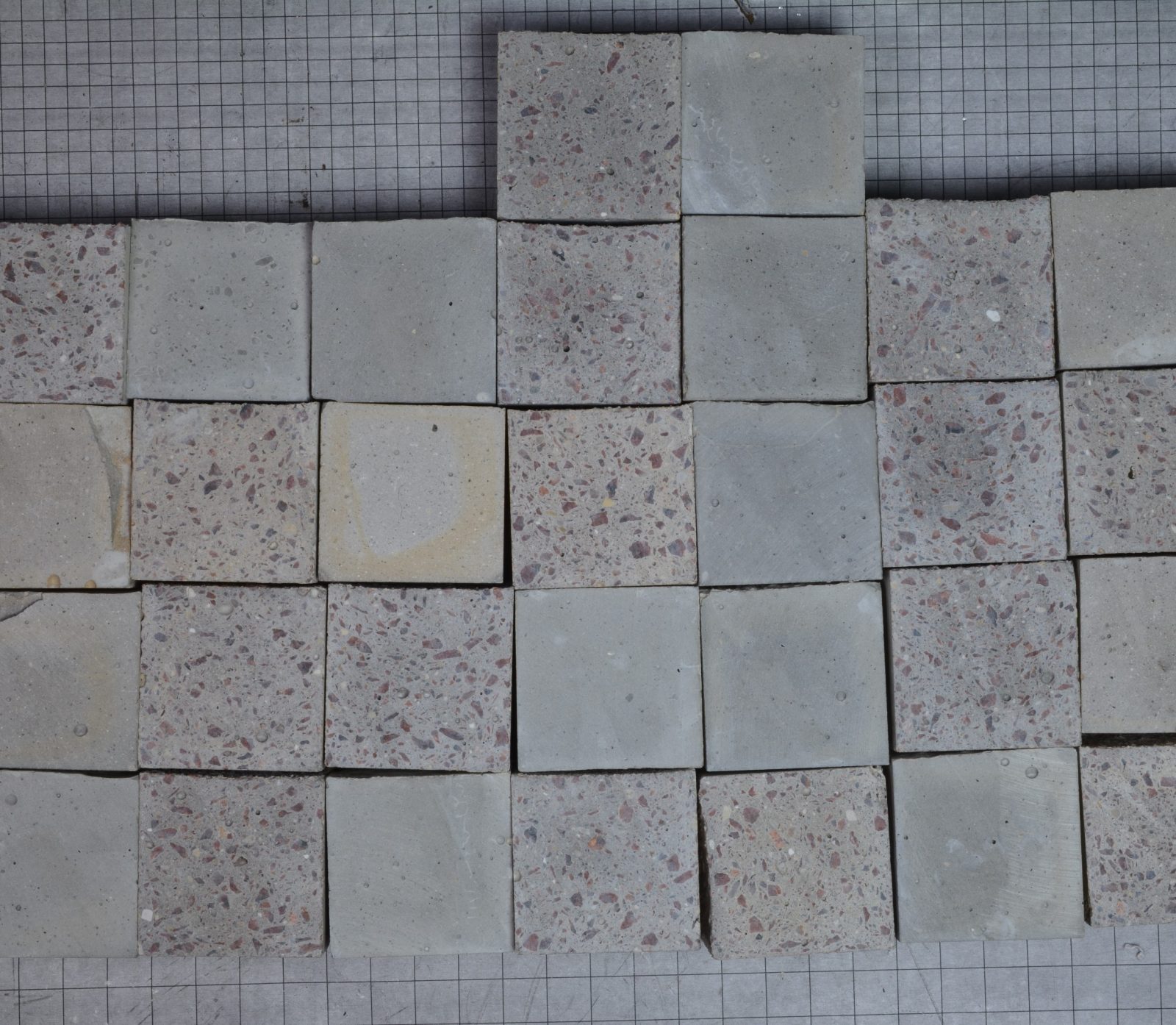
Examples of various types of concrete mixes.
Design Decisions: Reducing Embodied Carbon
When calculating the embodied carbon of concrete (or any material), it is important to understand two things—the material’s embodied carbon data and the quantity of material being used. This discussion focuses on how to create lower-carbon concrete mixes using the material’s embodied carbon data, but we would be remiss to not also touch on the second part of the equation—the quantity of material used. Lower-embodied-carbon concrete mix designs rely on efficient structural design to maximize the total embodied carbon reduction for the project. This begins with an efficient column layout and appropriate selection of gravity and lateral structural systems. When a client or design team creates something less efficient structurally (say, a long entrance cantilever), the team must acknowledge not just the monetary cost associated with the decision and its corresponding increase in material quantity or higher-strength material required, but also the carbon cost incurred.
The same holds true for maximizing the lifespan of structures to cut carbon costs. Design decisions to improve the resilience of concrete structures under environmental forces (wind, earthquake, floods, fires, etc.), as well as the ability to adapt to changes of use, plays to the durability characteristic of concrete. Most buildings are demolished due to changes in architectural preference or functionality long before the structure is obsolete. This makes the already spent up-front embodied carbon much more ”expensive” when considered on a per-year basis.
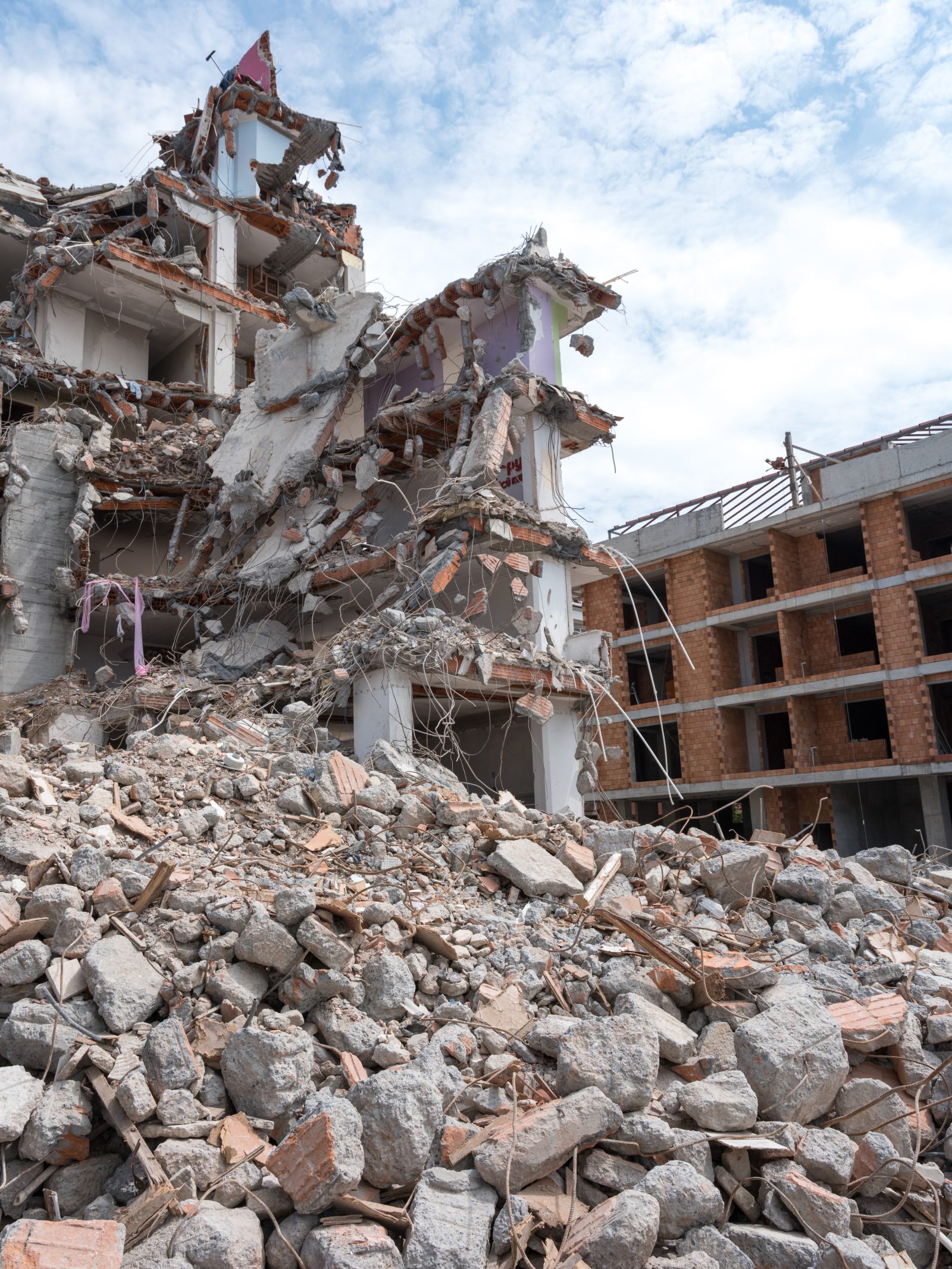
Demolishing and replacing buildings prematurely can add to the per-year cost of embodied carbon.
Many project stakeholders, including the design and construction team, are involved in these discussions, as there are both constructability and cost implications. Designers write the concrete material specification, which influences the makeup of each concrete mix. Structural engineers know what qualities they want in the mix (e.g., compressive strength). The building code and authority having jurisdiction impose requirements for concrete mixes based on their end use (e.g., durability requirements for elements exposed to weather, chlorides, or sulfates). And concrete mix providers know how their plant can best achieve these desired outcomes.
Ultimately, these discussions lead to a conversation about prescriptive vs. performance-based specifications.

Historically, concrete specifications included prescriptive concrete mix design requirements that outlined the maximum water-cement ratio, minimum cementitious materials contents, air entrainment, and more. These specifications could be limiting, constraining ready-mix providers in what could be implemented into a mix design. As the industry moves toward lower-carbon concrete mix designs, it is important for designers to think about performance-based specifications and how they can specify key mix properties (i.e., concrete compressive strength and durability requirements) and allow ready-mix suppliers the flexibility to best meet those guidelines based on regionally available materials and internal
plant practices.
Within these performance-based specifications, project teams should also call for the submission of mix-specific Environmental Product Declarations (EPDs) as a component of the mix design submittal. EPDs document the environmental impacts of a material within certain stages of its life cycle across six impact categories, one of them being global warming potential (GWP). Limits on GWP may be required to satisfy code or locality requirements for a project, or can be used to evaluate the relative environmental impact of different materials.

Concrete mixing.
Projects typically have multiple mix designs, which are selected for a given element based on that element’s individual design criteria. They include both strength and durability requirements, as well as how that element’s placement fits into the overall project schedule. When specifying concrete mix properties for each element, there are several things that designers should consider, including:
- What time frame do you really need for strength gain? Can you tolerate fifty-six days for some elements? Ninety days?
This needs to be up front and clear on the contract drawings early in the project. Make sure the contractor accounts for this in their construction schedule, so it isn’t a surprise later on. Elements that can tolerate a delayed strength gain may be a candidate for a lower carbon concrete mix. - Are there any particular finishing requirements, for instance, for flooring or exposed concrete?
In modern ASTM C595 blended cements, the limestone (and clinker if a plant produces all to the same fineness level) is much finer than traditional Portland cement. This added surface area increases water demand and decreases bleed water. As a result, the concrete can be more susceptible to premature drying of the surface unless additional protection measures are provided. This can affect your tolerance for using Type IL or other less carbon-intensive cements. - What is your risk tolerance for this element? Is there an opportunity to push the envelope with supplementary cementitious materials or other innovations?
This will depend on the element you are specifying a mix design for, whether it is a strength-controlled element, like a column or elevated floor slab, or whether it is something less strength-driven, like an interior slab-on-grade or exterior pavement slab.
Pre-Construction Decisions: Submittal Concerns in the Project Trailer
The adage “Failure to plan is planning to fail” is true for many aspects of construction, but it is extremely true for concrete work. All involved parties (designer, architect, owner, general contractor, special inspector, concrete subcontractor, and material supplier) should have a detailed pre-construction meeting and periodic check-in meetings throughout construction. It may even be prudent to have a condensed meeting before creating any submittals. During this “trailer” stage of pre-construction, which includes submittal review, there are several important items to look for:
- Type of cement used in mixes: Hopefully, a project’s specifications have flexibility in the acceptable type (including governing ASTM standard) of cement to be used on the project, as discussed in the previous section. When reviewing a mix design, it is essential that the trial batches use the type of cement that will be used in the project concrete. For example, a supplier cannot substitute Type IL for Type I/II into an otherwise unchanged mix down the line without treating it as a new mix design for review and approval, including all specified testing. These cements have different chemical makeups and will react differently. This is even more true for alternative binders. Likewise, if an ASTM C595 cement is used in a trial mix, but the source (i.e., original manufacturer) of that cement type must change due to availability, cost, or other reasons during the project, new trial mixes should also be reviewed. When comparing ASTM C595 cement from different suppliers, there is variability in the production of cement in terms of how finely ground the limestone is and when it is introduced in the process that can affect the plastic and hardened properties. This typically has a negligible effect on compressive strength and a moderate effect on global warming potential (GWP) values, but a potentially significant effect on finishing. Therefore, it is essential that any new cements are communicated to the field team.
- Compressive strength age: Confirm that everyone is on the same page for the age at which the compressive strength will be tested for acceptance of the concrete as stated on the structural drawings (e.g., twenty-eight vs. fifty-six vs. ninety days). This will reduce any alarm or concern by parties if initial compressive strength results come back lower than on previous projects at seven or fourteen days, since many low-carbon mix designs gain strength more slowly, but will still achieve the same long-term strength. Additionally, the contractor must be aware of the approximate expected early strength of elements to ensure they align with their shoring removal plans or construction sequencing requirements.
- Environmental product declarations (EPDs): These documents should be mix-specific EPDs for the exact mixes delivered to the site. A mix-specific EPD provides the GWP and other environmental values to meet government regulations on embodied carbon, as well as other accurate values to be entered into life cycle analysis (LCA) calculations. Along with the notes on the type of cement described above, it is also important to track material source suppliers.
- On-site mock-ups for flatwork: Discuss with the team the benefits of an on-site mockup, which include lowering the risk of future re-work if a low-carbon mix is placed poorly due to unfamiliarity with placing or finishing low-carbon concrete. The benefits will be compared against the added cost and schedule of a mockup. These can be especially beneficial to a contractor who is placing or finishing a low-carbon concrete mix for the first time, or the first time a concrete contractor purchases a mix from a certain plant. The largest variations between low-carbon mixes and traditional mix designs are in the finishing of flatwork. We typically don’t see as many differences in columns or beams for finishing across various mix types.
- Placement and finishing work plans: As commonly discussed in preconstruction meetings, the work plan should be reviewed by all parties. This is a good time to gauge the whole team’s familiarity with low-carbon concrete and to discuss what has or has not worked in the past. Contingency plans should also be discussed now if difficulties arise during construction.
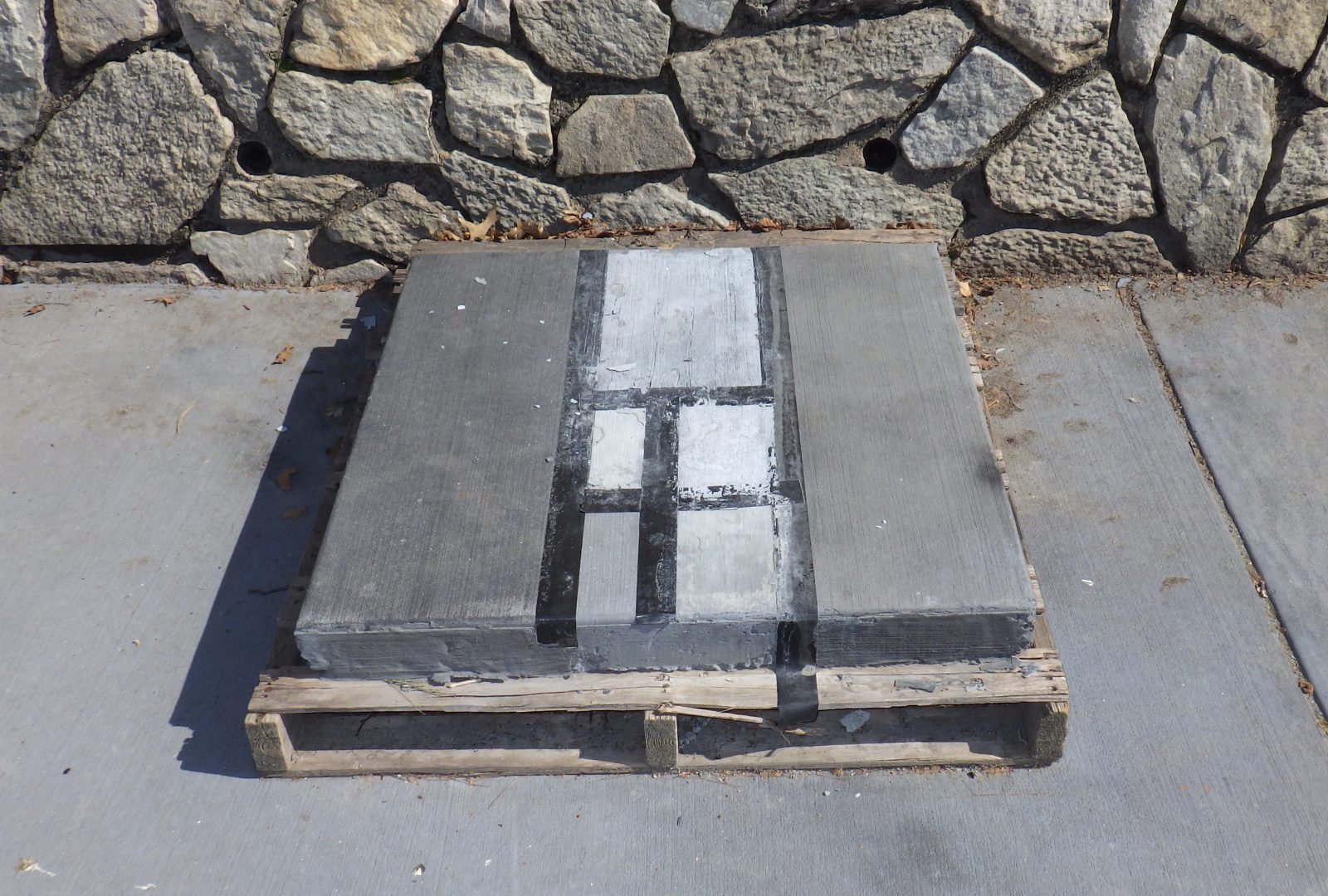
On-site concrete mock-up.
Construction Phase Decisions: Responding in the Field
The next phase begins when concrete trucks arrive at the site. It is important to remember that although the “final condition” of properly designed low-carbon concrete will be nearly identical to traditional concrete when the structure is complete (e.g., compressive strength, durability, fire resistance), the process the concrete takes to harden, set, and reach that condition will be different. As your structure begins to take shape, these are some considerations to monitor:
- Finishing and shrinkage: ASTM C595 Type IL cement often has a tighter finishing window than ASTM C150 cement and requires proper planning by the team. It is essential for finishers to be aware of these differences. Less bleed water can lead to premature drying of the surface before or during finishing. The associated shorter finishing time can affect the timeline that finishers are accustomed to. There is also an increased vulnerability to plastic shrinkage due to the decrease in bleed water. Field measures such as evaporation retarders, moisture applications, or windbreaks can improve resistance to plastic shrinkage and are almost always required when working with low-carbon concrete.
- Weather: Access to good weather data is essential for the construction team. Lower-carbon concrete mixtures that rely on high SCM ratios often perform well in warm weather but are likely to be more challenged in cold weather due to their lower internal heat generation. It is common for mixtures to be adjusted over the course of time if the project is long enough for the weather to change between seasons. Any changes to a mix can affect the workability and finishing of concrete, so it is essential to communicate changes to the field team. On the bookkeeping side, these adjustments can affect the GWP value and should be incorporated into GWP reporting or LCAs.
- Communication: This is one of the most important keys of construction—field teams should be aware of the schedule and sequencing. The work plans discussed in the trailer should be followed, and any difficulties should be brought to the team’s attention early. Likewise, backup procedures should be in place in case things go awry during placement.
- Low concrete breaks at milestones: Even when accounting for later strength gain and specifying fifty-six- or ninety-day breaks, concrete breaks at certain milestones may be lower than expected. ACI 318 allows for occasional compressive strength results marginally below the specified strength, provided the results meet other code acceptance criteria. The design and construction team should refer to ACI 318 or the applicable building code for guidance and strength acceptance requirements. It is helpful to convey this scenario to the owner as a possibility and that it is acceptable by both code and engineering practice. If low breaks do occur, schedule a follow-up trailer meeting to see what can be done to reduce this likelihood during future concrete placement.
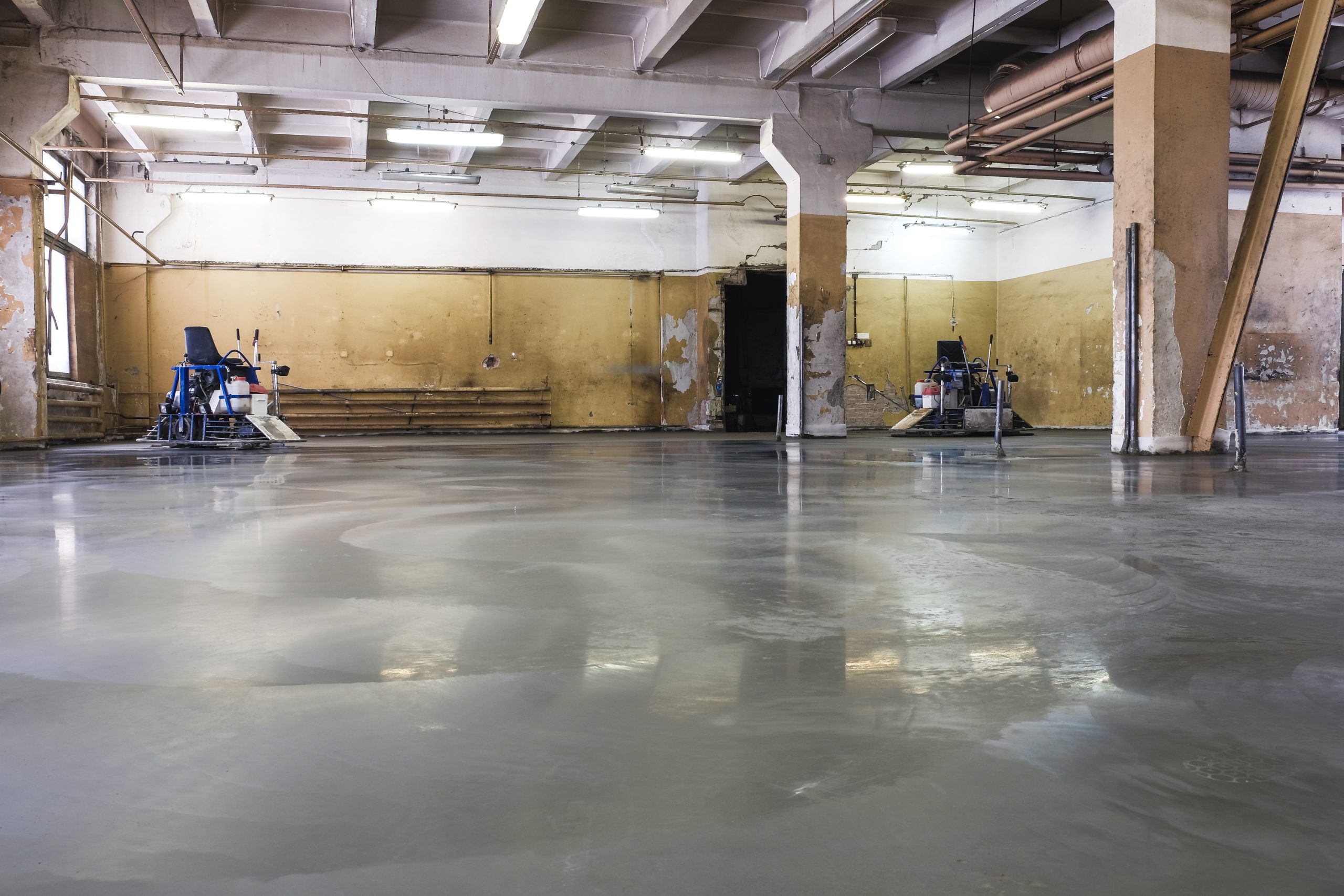
Concrete bleed water.

Ideal weather conditions.
1 of 2
Concluding Thoughts
Concrete has always been a variable construction material, with the exact components used to produce it changing from the ancient Romans through today. The industry is aware of this and has adjusted to work with different versions of it for thousands of years. Lower embodied carbon tools introduce a new arsenal of products into mix designs that bring variability. As we continue to develop ways to lower the embodied carbon footprint of concrete, we need to ensure that we understand the impact of using SCMs and alternate cements at each stage, from design to placement and finishing to the finished hardened properties. This necessitates even more communication between project team members about design intent, construction schedule and sequence, and field procedures.