The Frick Collection: Modernizing Circulation and Preserving a Historic Cornice
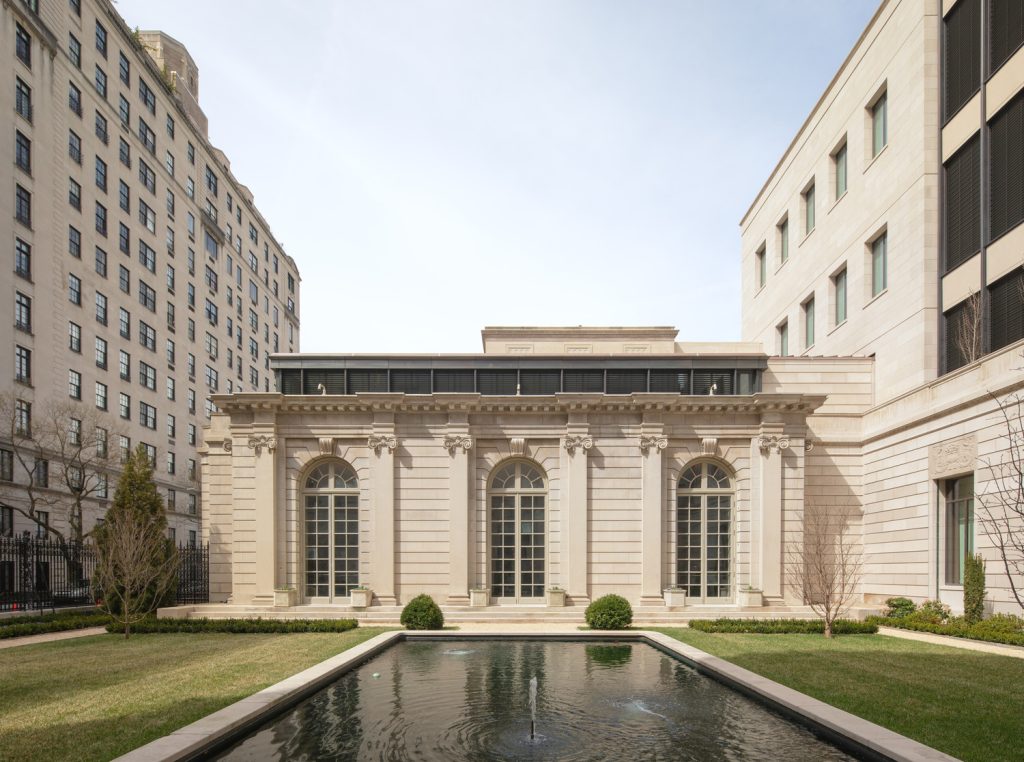
In April 2025, The Frick Collection, an internationally renowned art museum and research center housed in a limestone-clad, Gilded Age mansion on the Upper East Side of New York City, reopened to the public after a multiyear expansion and restoration project.
The museum, both a New York City landmark and listed on the National Register of Historic Places, has an astounding collection of paintings, sculptures, and decorative arts from the Renaissance to the late nineteenth century. The Frick Collection consists of multiple buildings constructed throughout the twentieth century, including the original 1914 mansion of Henry Clay and Adelaide Frick, the 1935 museum extension that included the lauded Garden Court, the 1977 reception hall, and the 70th Street Garden. In 2017, The Frick Collection hired Selldorf Architects, Beyer Blinder Belle Architects and Planners LLP, and a team of more than fifteen consultants. Simpson Gumpertz & Heger Inc. (SGH) was hired as the structural engineer of record to design the renovation. The museum presented the team with several goals for the project, including upgrading the mechanical, electrical, and plumbing systems throughout all buildings, replacing the skylights, and improving accessibility between the buildings, while striving to maintain its historic fabric, particularly the interior finishes of the mansion.
As part of the renovation and expansion, the roof framing of the reception hall was demolished to clear space for a one-story overbuild (vertical enlargement), and a passenger elevator was constructed within the mansion to service the second floor of the museum—which had never before been open to the public—along with the reception hall and new auditorium. The mansion’s east façade features a large, decorative limestone cornice that was supported on the adjacent roof of the reception hall. Spatial constraints and the existing construction created several design challenges in re-supporting the existing cornice on the mansion, while simultaneously creating an opening for the new elevator. This article highlights the challenges encountered throughout the planning, design, and construction of the new elevator and cornice re-support, as well as the partnership between architects, consultants, and contractors that contributed to the successful achievement of the design intent.
Publisher
APT Bulletin: The Journal of Preservation Technology