New York, NY
New York City Transit Rail Vehicle Qualification
Scope/Solutions
Deploying new rail vehicles for New York City Transit (NYCT) requires qualifying the carbody’s fitness for use and incorporating crash energy management (CEM). SGH, working with EXP, is providing engineering support to help Hyundai Rotem develop a carbody design to satisfy the NYCT’s specifications. The carbody design must consider manufacturability and balance the demands of crashworthiness, static, and fatigue performance requirements over their minimum forty-year service life.
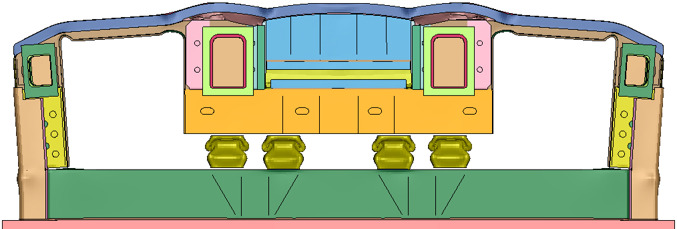
SGH developed a conceptual design to incorporate crush elements in the end frame that will help control collapse of the carbody’s end. Highlights of our work include:
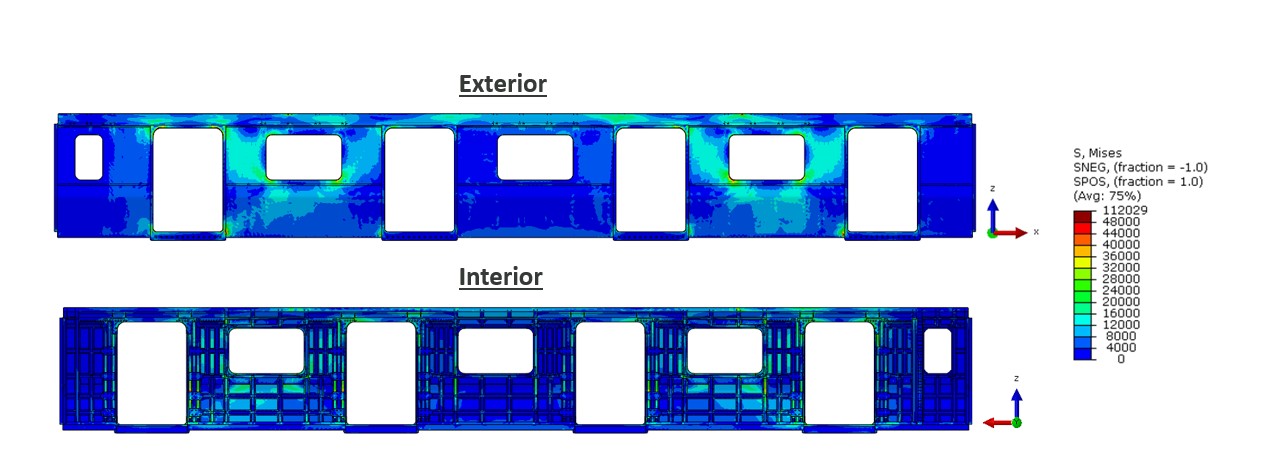
- Developing finite element models to evaluate carbody static, fatigue, and natural frequency load cases and the required train-to-train crash analyses
- Performing scoping analyses to determine appropriate crash energy distributions for a ten-car assembly, including preliminary stress analyses for the primary static load cases
- Adapting the three-dimensional models to incorporate the CEM design
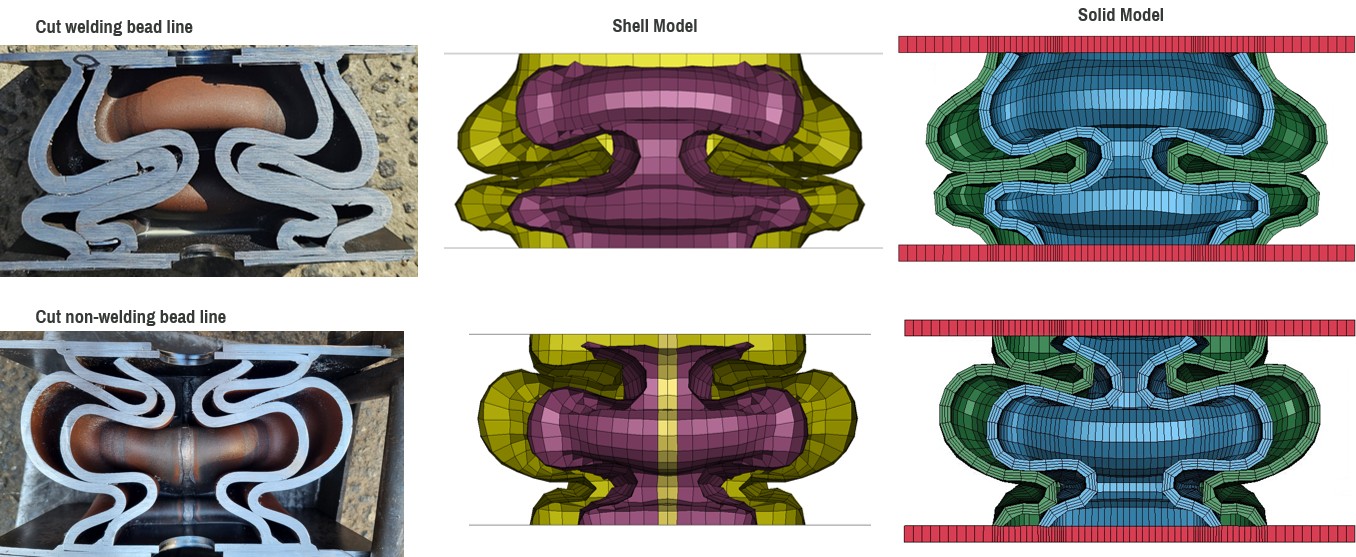
- Supporting testing of a prototype structure, including crush testing conducted on individual full-scale CEM components and dynamic impact testing conducted on an endframe representing the CEM system and its support on the carbody
- Developing required project documentation to help Hyundai Rotem qualify their design for use in New York City’s transit system
- Advising and helping Hyundai Rotem interact with NYCT and their engineers to efficiently navigate the qualification program
Project Summary
Solutions
New Construction
Services
Structures | Advanced Analysis
Markets
Infrastructure & Transportation
Client(s)
EXP | Hyundai Rotem
Specialized Capabilities
Computational Mechanics
Key team members
Robert MacNeill
Managing Principal, Structural Mechanics and Materials
Additional Projects
Northeast
General Edwards Bridge
The General Edwards Bridge is a multiple-span steel-girder bridge over the mouth of the Saugus River where it flows into the Atlantic Ocean. In 2003, a portion of concrete fell from the counterweight into the water. SGH performed a condition assessment and designed emergency and permanent repairs.
Northeast
Harvard University Science Complex, MWRA Sewer
SGH studied the potential effects of ground displacement that can distort and increase soil loads on buried structures, construction traffic live loads, surface vibrations, and impacts from falling objects.